What India's rising embroidery demand means for designers
Demand signals are not a brief, and no designer should design from a graph. But if you are planning a collection and deciding where the embroidery budget goes, it is worth knowing which way the market is currently leaning — and which of those directions are genuinely hard to produce at scale.
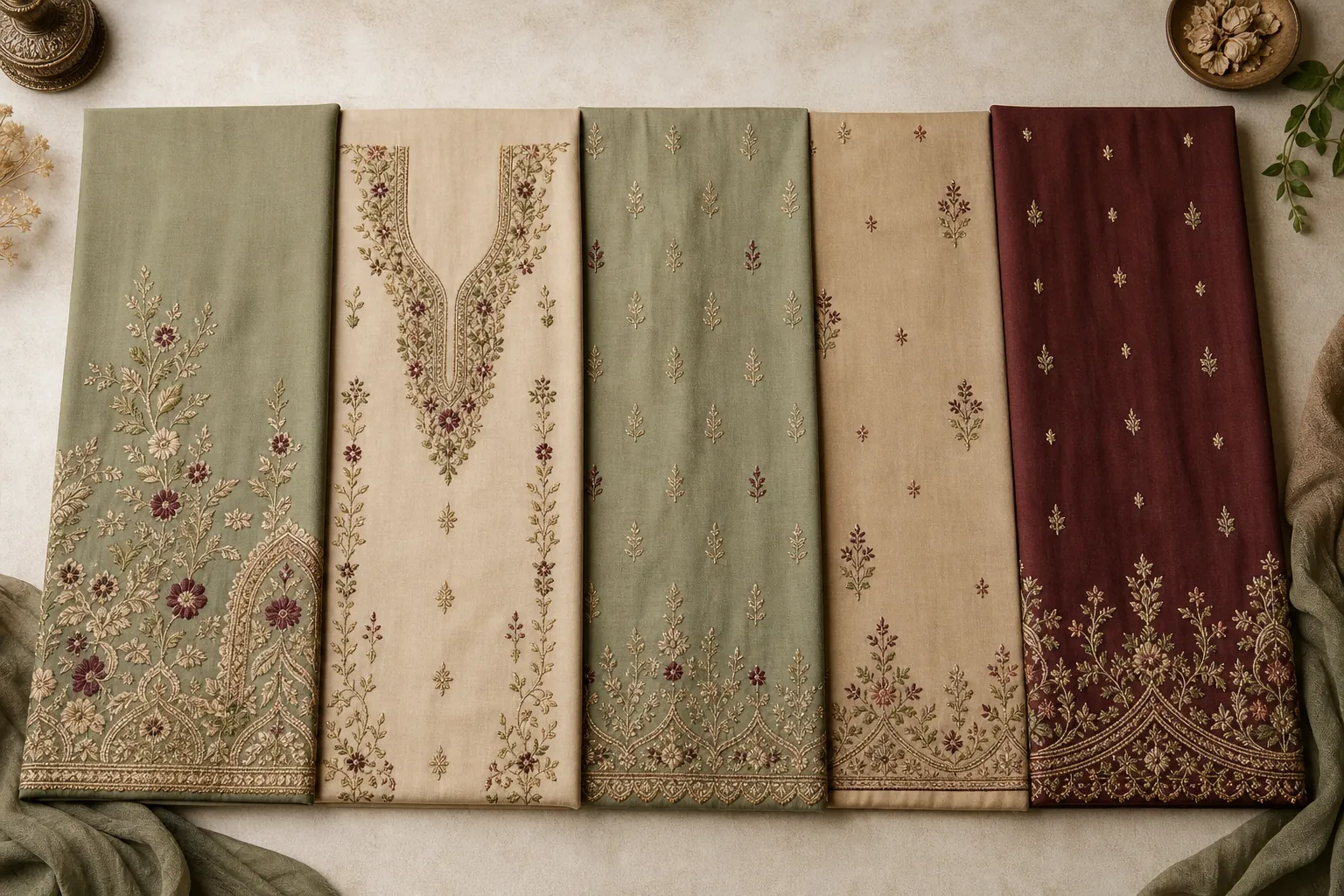
What the demand data actually shows
Looking at Google Trends for India over the last ninety days, the fastest-rising embroidery-related searches are these:
- Zardozi — up around 80%. The clearest single movement in the set.
- Hand embroidery suits — up around 70%.
- Embroidery designs images — up around 70%.
- Suit design — up around 60%, kurti up around 40%, hand work up around 20%.
- Across twelve months, hand embroidery design carries the highest sustained volume, with hand work close behind, then blouse and saree.
- Shirts is up around 90% and shirt around 60% — off a much smaller base.
With that caveat, four things in the list are worth a designer’s attention — and two of them are production problems before they are design opportunities.
Zardozi is the standout, and the hardest to scale
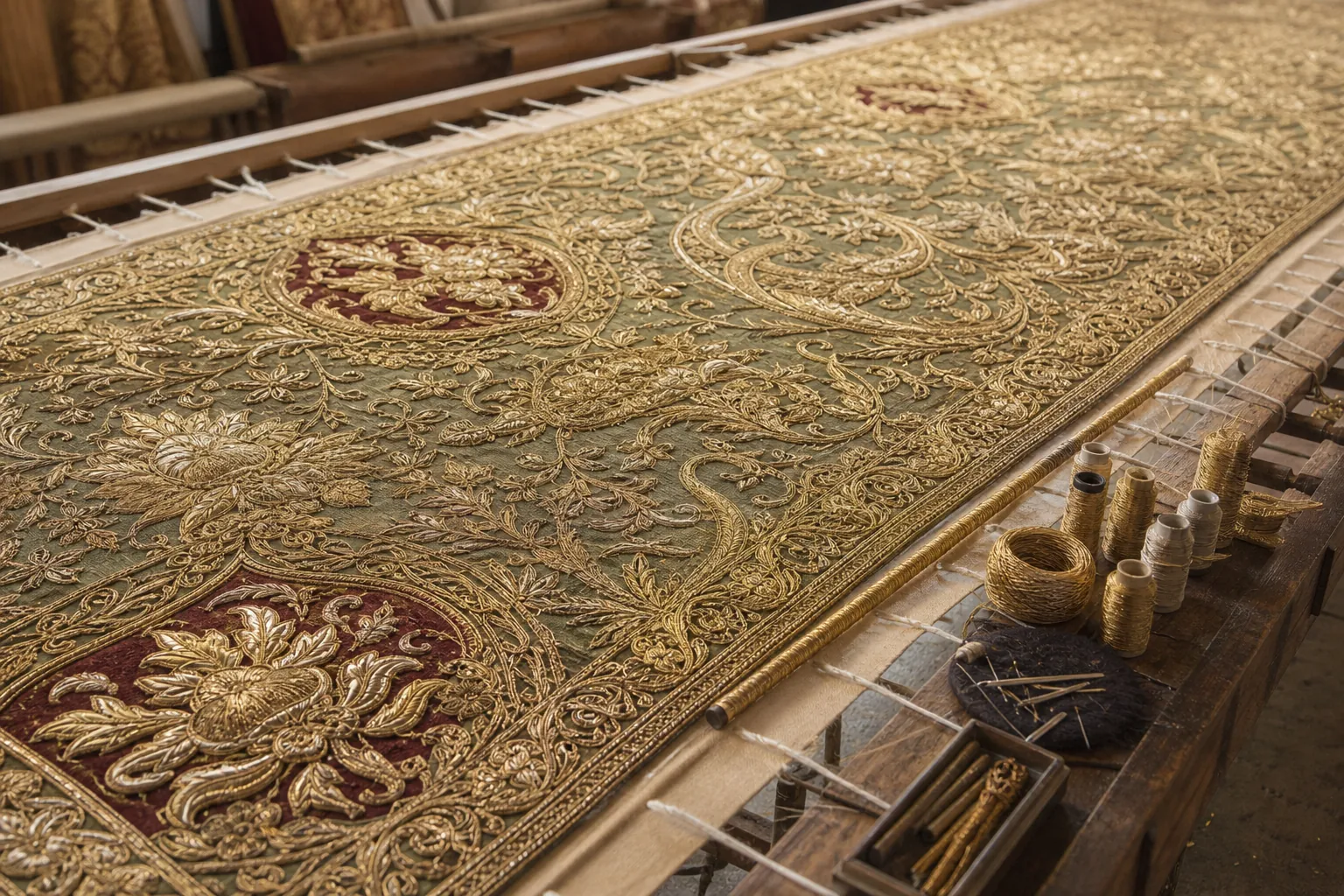
Zardozi rising fastest is not surprising — it photographs beautifully and it reads as luxury instantly. But it is also the most expensive and least scalable hand technique there is, and designers routinely discover this after the line sheet is signed.
Every raised element — dabka, nakshi, kora, salma — is cut and stitched down individually. There is no faster method that produces the same result. A dense zardozi panel can occupy a frame and a pair of trained hands for weeks, and trained zardozi hands are not interchangeable with general embroidery hands.
The practical consequences for a collection:
- Treat zardozi as your hero piece, not your house style. One or two statement garments carrying real zardozi, supported by lighter techniques across the rest, is how most viable collections are structured.
- Book capacity far earlier than you think. Through wedding season, skilled zardozi karigars in Mumbai are committed well in advance. The constraint is hands, not materials.
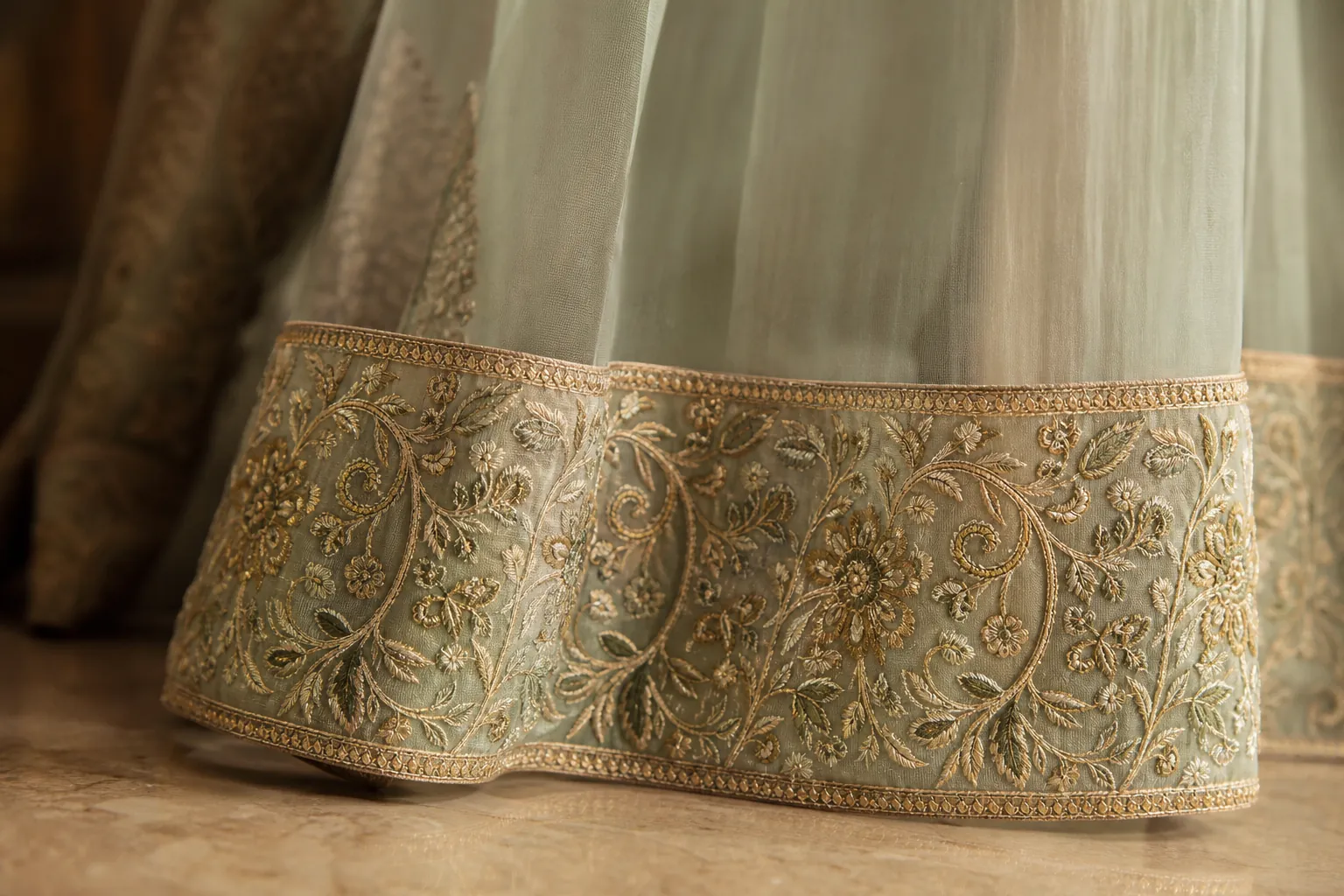
- Consider flat zari for the supporting pieces. Metallic thread couched on the surface keeps the gold and loses most of the hours. At arm’s length on a rail, the difference is far smaller than the invoice.
We set out the full cost ranking in which embroidery is most expensive.
Suits and kurtis: where the volume sits
Hand embroidery suits and suit design rising together is the more commercially interesting signal, because that is repeat-purchase territory rather than once-in-a-lifetime territory.
It is also where production discipline earns its money. A bridal lehenga is one object and can tolerate the character of a single pair of hands. A run of forty kurtis cannot — every daaman has to match, which means an approved reference swatch, consistent thread lots and the same hands on the same motif throughout.
This is exactly what sample development exists for. Once a swatch is worked, the hours are known, which converts a vague estimate into a firm per-piece rate you can actually build a margin on.
Buyers want to see it before they ask
“Embroidery designs images” climbing roughly 70% is the most actionable signal in the whole set, and it is not about embroidery at all. It says people want to see work before they will start a conversation.
For your own label, that means photographing embroidery properly: raking light across the surface rather than flat-on, close enough to read the stitch, and showing the piece on the body as well as flat. Embroidery shot badly looks printed, and printed looks cheap.
For sourcing, it means asking any atelier to show you craft close-up rather than finished garments. Be suspicious of a workshop that can only show you full looks — the stitch is where the truth is.
The quiet rise of menswear detailing
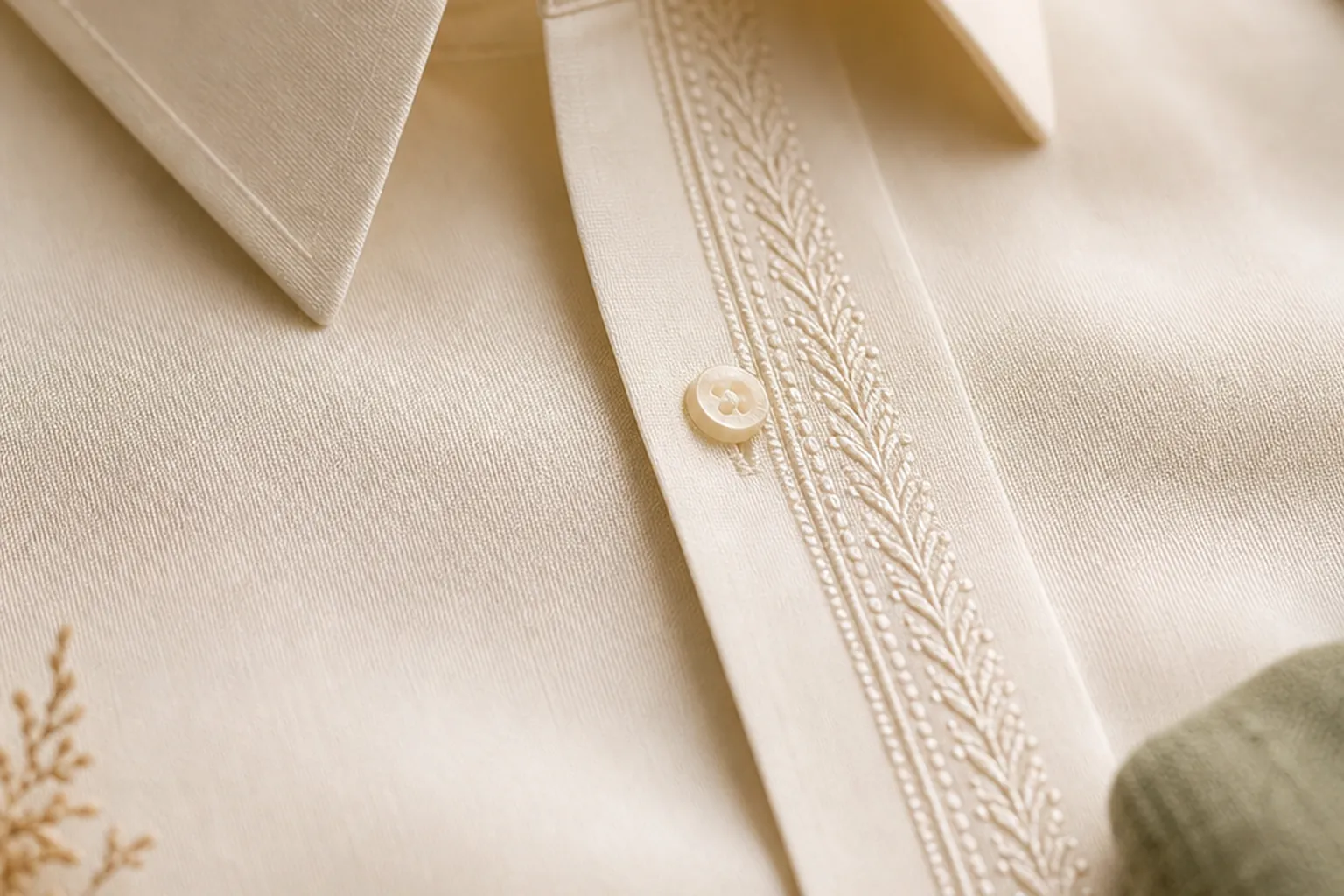
Shirt and shirts are rising faster in percentage terms than almost anything else in the data, from a genuinely small base. We would not build a collection on that alone. But it matches what we see on the frames: more plackets, collars, cuffs and sherwani detailing than a few years ago, and far more tonal work — thread matched close to the fabric so the embroidery reads as texture rather than ornament.
Menswear embroidery is unforgiving. There is nowhere to hide an uneven line on a plain placket, and the margin for error is smaller than on a busy lehenga panel. But it is also comparatively unserved, which is usually where opportunity sits.
What this means for your production calendar
- Decide your hero pieces first and book those hands before anything else. The slowest technique sets your critical path.
- Sample before you finalise the line sheet, not after. Discovering that your chosen density makes georgette hang badly is a cheap lesson on a swatch and an expensive one on forty garments.
- Allow a second sampling round. Needing one is normal, not a failure, and the calendars that fail are the ones with no room for it.
- Lock thread lots early. Dye lots move. Matching across a run started months apart is avoidable pain.
- Work backwards from the show or delivery date, and tell your atelier the real date. We would rather decline a deadline than miss one.
Briefing an atelier for a collection
The collections that run smoothly are the ones briefed precisely at the start. Send the technical drawing or reference, your actual fabric, the placement and scale on the garment, the quantity per style, and the delivery date. If you are unsure of a technique’s name, describe the effect you want and let the atelier identify it.
We work with designers, boutiques and labels on exactly this basis from our studio in Dahisar East, Mumbai — sampling, production runs and repeat seasons, all under confidentiality. How we work with designers covers the relationship in detail, and what we need to quote will save you a round trip.
Tell us what you want made.
Send a reference photo, your fabric and your deadline. We reply with honest advice and a clear quotation.
Frequently asked questions
Which embroidery technique is growing fastest in India?
On Google Trends data for India over the last ninety days, zardozi shows the strongest rise, followed by hand embroidery suits and suit design. Trends measures relative interest rather than absolute volume, so treat it as direction rather than market sizing.
Why is zardozi difficult to produce at scale?
Because every raised metal element is cut and stitched down individually, and there is no faster method that gives the same result. A dense panel can occupy a frame and a trained craftsman for weeks, and skilled zardozi hands are booked well ahead in season.
How do you keep embroidery consistent across a production run?
With an approved reference swatch that stays in the studio, consistent thread lots secured at the start, and the same hands on the same motif throughout. Every piece is checked against the swatch rather than against a memory of a conversation.
How far ahead should a designer book embroidery capacity?
As early as the hero pieces are decided, because the slowest technique sets the critical path for the whole collection. Through wedding season the constraint is skilled hands rather than materials, and those are committed well in advance.
Can you quote a firm per-piece rate for a collection?
Once a sample swatch has been worked, yes. Working the swatch tells us the real hours involved, which turns an estimate into a firm per-piece rate. Before that, any figure is a guess.
Do you work with designers on repeat seasons?
Yes. A large part of our work is sampling and production for fashion designers, boutiques and labels, handled under confidentiality, including repeat work across seasons.
Still have a question? Message us on WhatsApp or send an enquiry.