Bridal embroidery in Mumbai.
The one garment that gets photographed from every angle, kept for decades, and looked at closely. Bridal embroidery leaves no room for an approximate finish.
 MUMBAI • SINCE 1992

What we embroider for weddings
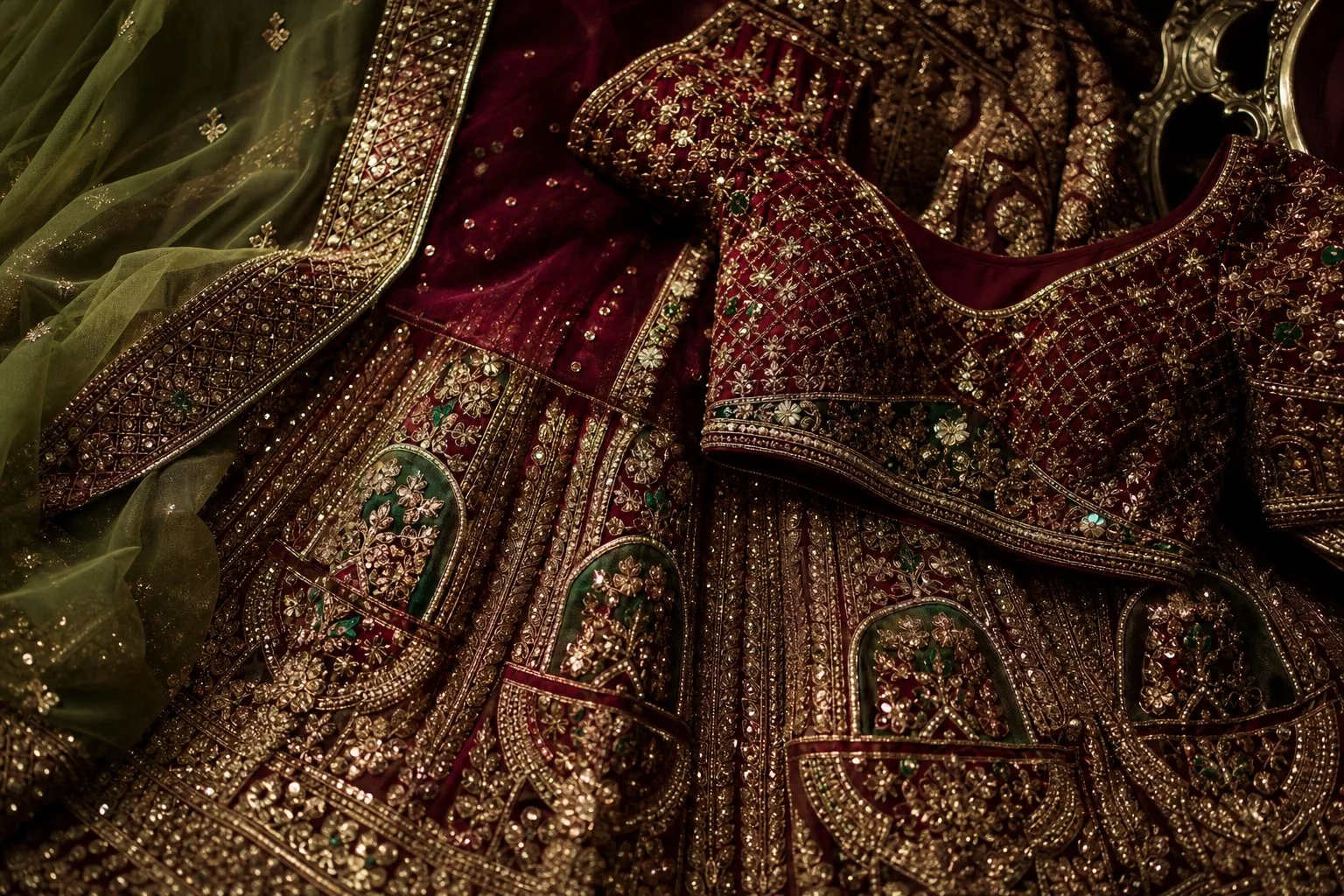
Bridal work is rarely a single piece. Most commissions cover a group of garments that need to read as one family: the lehenga, the blouse, the dupatta, and often a separate reception outfit in a lighter register.
- Bridal lehenga panels, kalis and hem borders
- Blouse work — neckline, sleeves, back and tassels
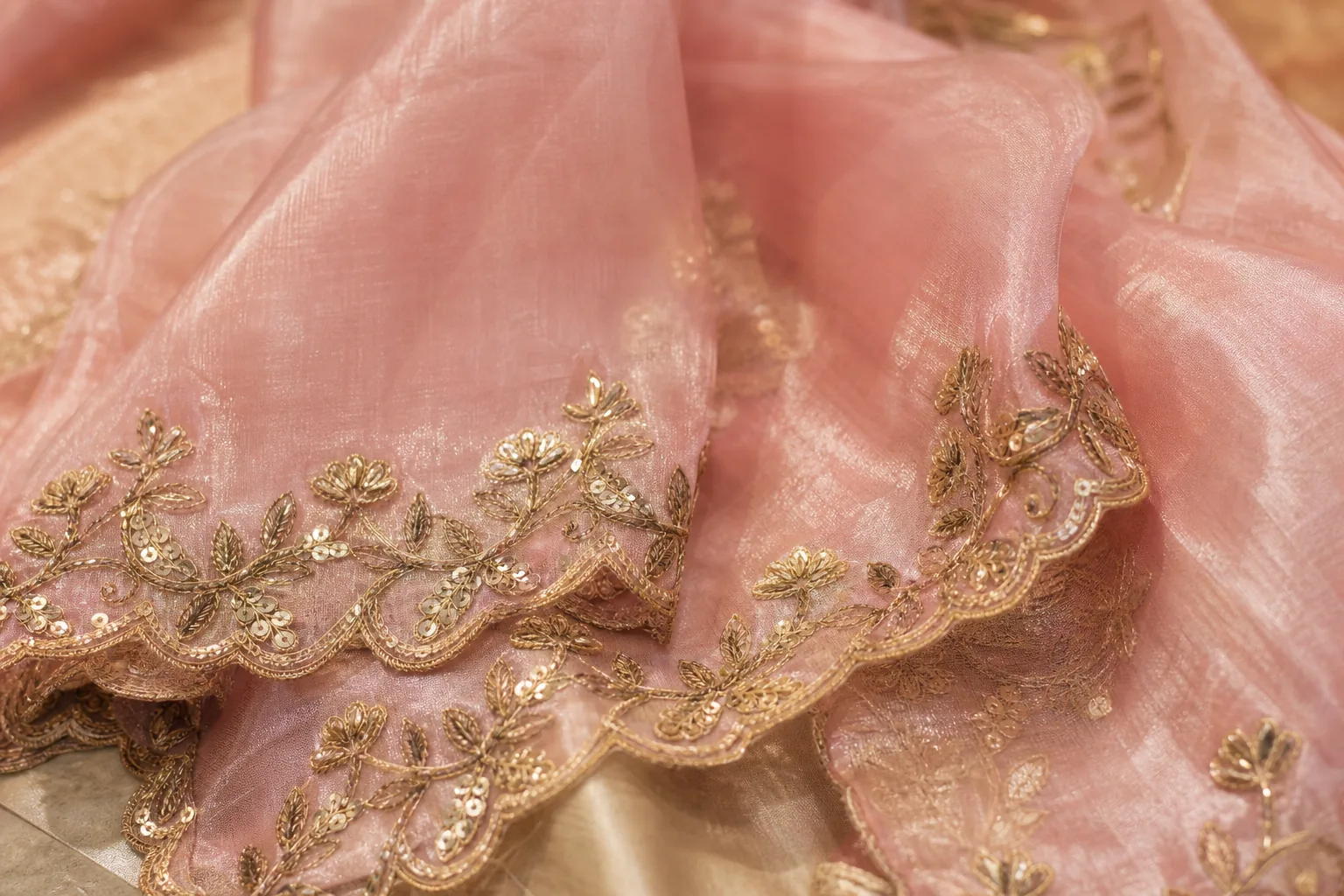
- Dupatta borders, corners and all-over motifs
- Reception gowns and cocktail wear
- Sangeet and mehendi outfits in lighter embellishment
- Groom sherwani, kurta plackets and stoles
- Trousseau saree borders and pallu work
Techniques that suit bridal work
Bridal embroidery is usually a combination rather than a single technique. The skill is in deciding how much of each the fabric can carry.
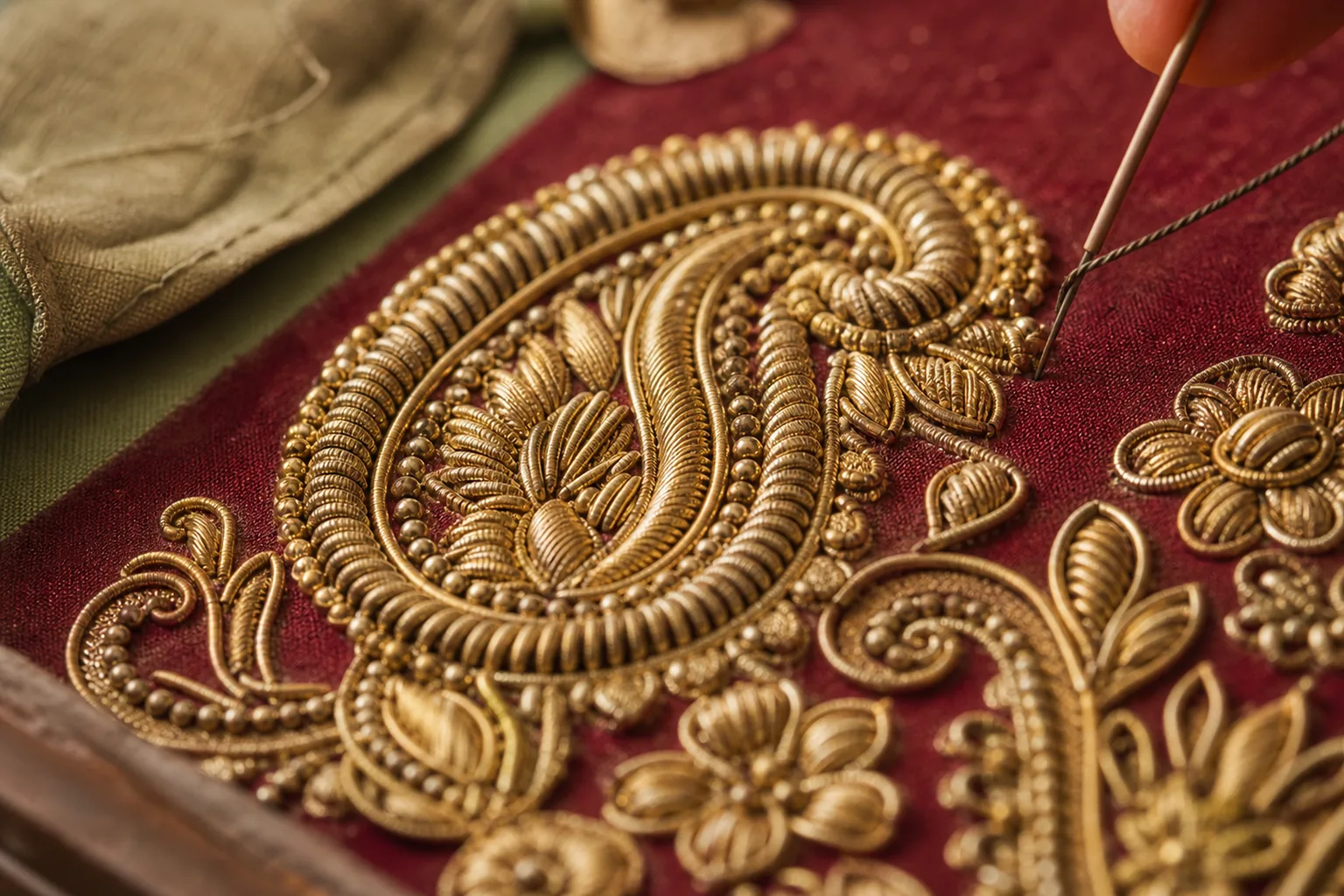
- Zardozi — raised metal-thread work, the traditional heart of Indian bridal embroidery
- Zari — flat gold and silver thread for borders and fine detail
- Aari — fast, fluid needle work ideal for flowing floral coverage
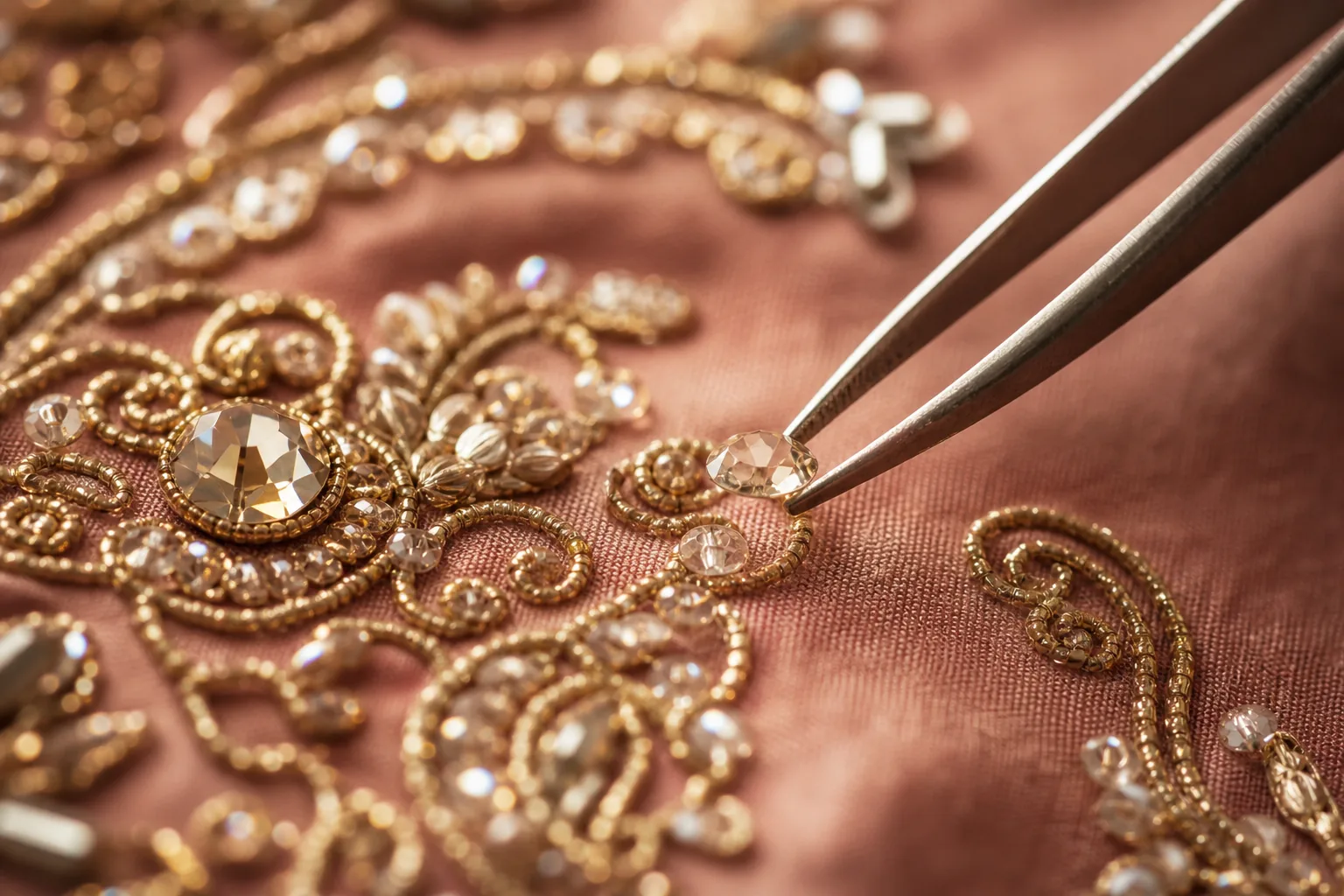
- Stone, crystal and pearl — hand-set for light and movement
- Sequin and cutdana — texture and shimmer without excessive weight
- Thread work — tonal detail that reads as texture rather than sparkle
How early to start
This is the question that decides everything. Detailed bridal hand work is measured in weeks, not days, and the November-to-February wedding season fills our frames early.
Approach us as soon as the outfit is decided — even before the fabric is bought. Early conversations change designs for the better and cost nothing. Late ones limit you to whatever is fast.
What drives bridal embroidery cost
Nobody can quote bridal work from a description alone. These are the variables that actually move the number:
- Coverage — a bordered design versus full-surface work
- Technique — zardozi and hand-set stone work are the slowest and costliest
- Materials — real zari, crystals and pearls versus thread and sequins
- Fabric — velvet and silk demand slower, more careful handling
- Density — the same motif at lower density can cost meaningfully less
- Timeline — a compressed deadline means reallocating the workshop
The techniques behind bridal work
Every bridal piece is a combination of these — chosen for your fabric, your budget and your wedding date.
Bridal embroidery questions.
How far in advance should I book bridal embroidery in Mumbai?
As early as possible, and ideally as soon as the outfit is decided. Detailed hand work takes weeks, and the November to February wedding season fills up well in advance.
Can you embroider a lehenga I have already bought?
Often yes, depending on the construction. Send photographs first so we can confirm the panels can be framed safely without damaging the existing garment.
Do you do groom and family outfits too?
Yes. Sherwani plackets, kurta detailing, stoles and family occasionwear are regular bridal-season work.
Can you match embroidery across the lehenga, blouse and dupatta?
Yes. Matched sets are standard bridal work — motif, scale and thread are kept consistent across every piece from a single approved sample.
Will you show my bridal outfit on social media?
Not unless you explicitly want us to. Bridal commissions are treated as private by default.
Still have a question? Message us on WhatsApp or send an enquiry.
Send a reference, get a real quotation.
We answer every enquiry personally — no automated replies.