Aari work in Mumbai.
Aari is the workhorse of fine Indian hand embroidery — quick in skilled hands, endlessly flexible, and capable of coverage that would take far longer with a straight needle.
 MUMBAI • SINCE 1992

What aari work actually is
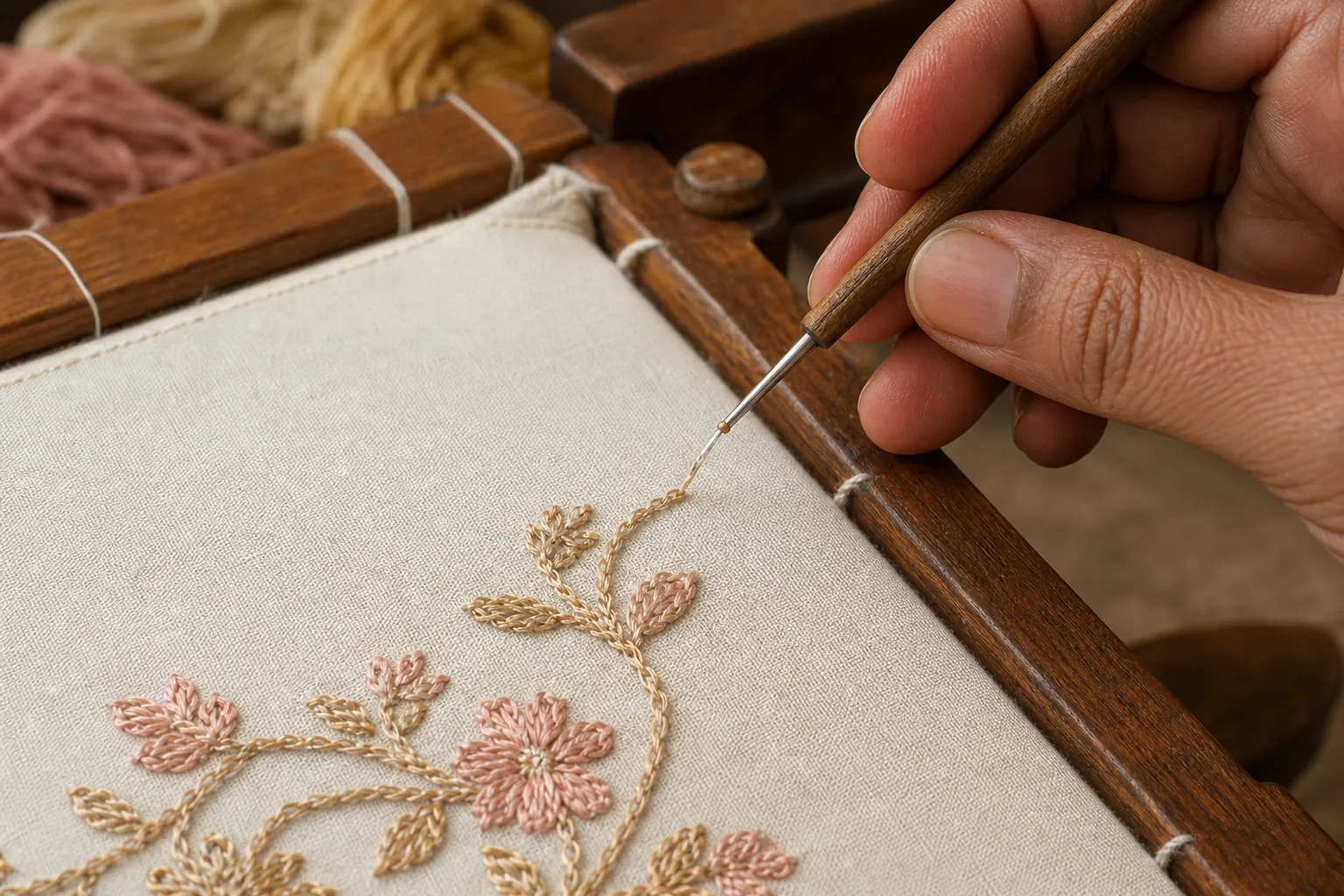
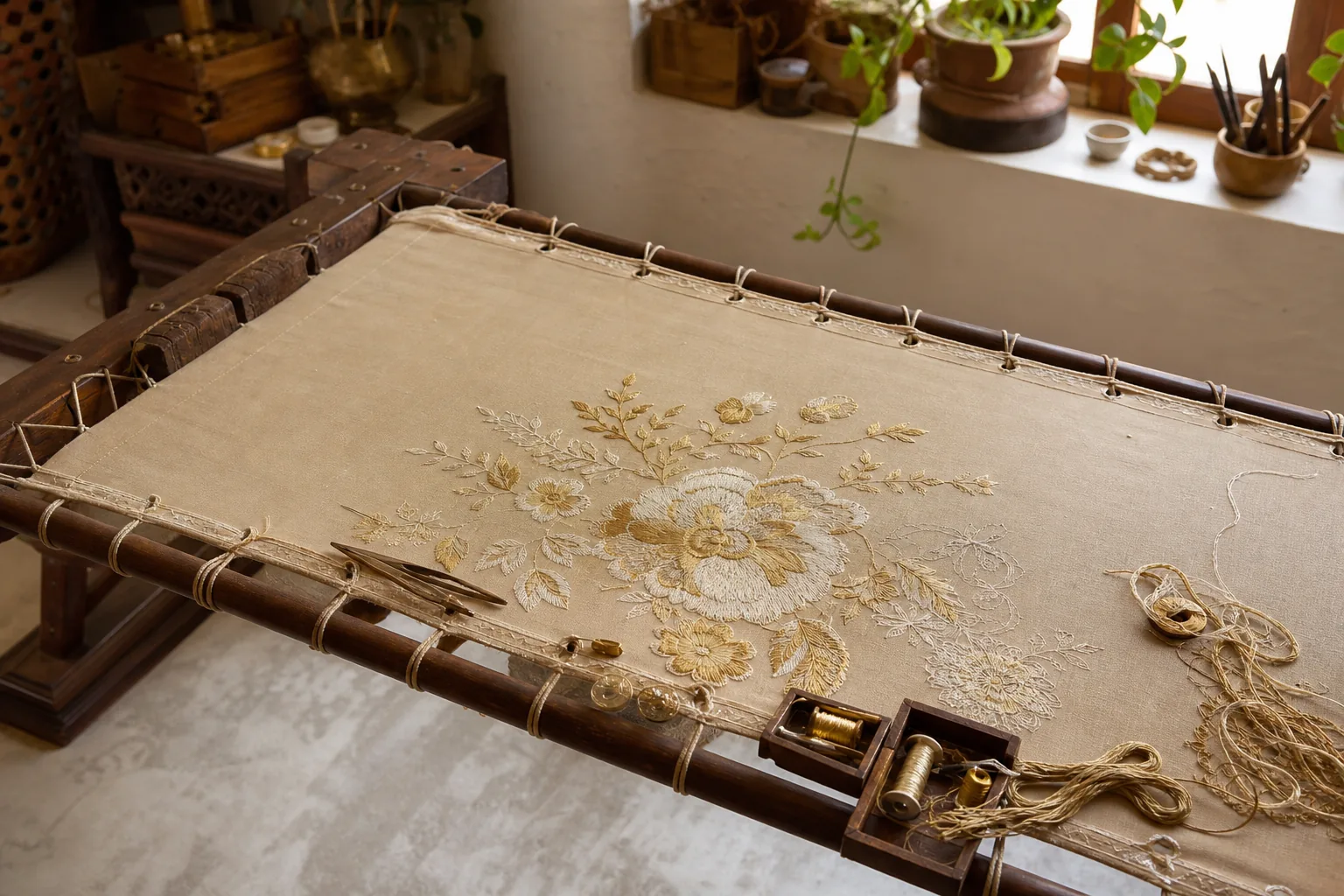
Aari uses a fine hooked needle, worked from above through fabric held taut on a frame. The hook pulls thread through in a continuous chain stitch, which is why aari can cover flowing floral areas far faster than a conventional needle while keeping the line fluid.
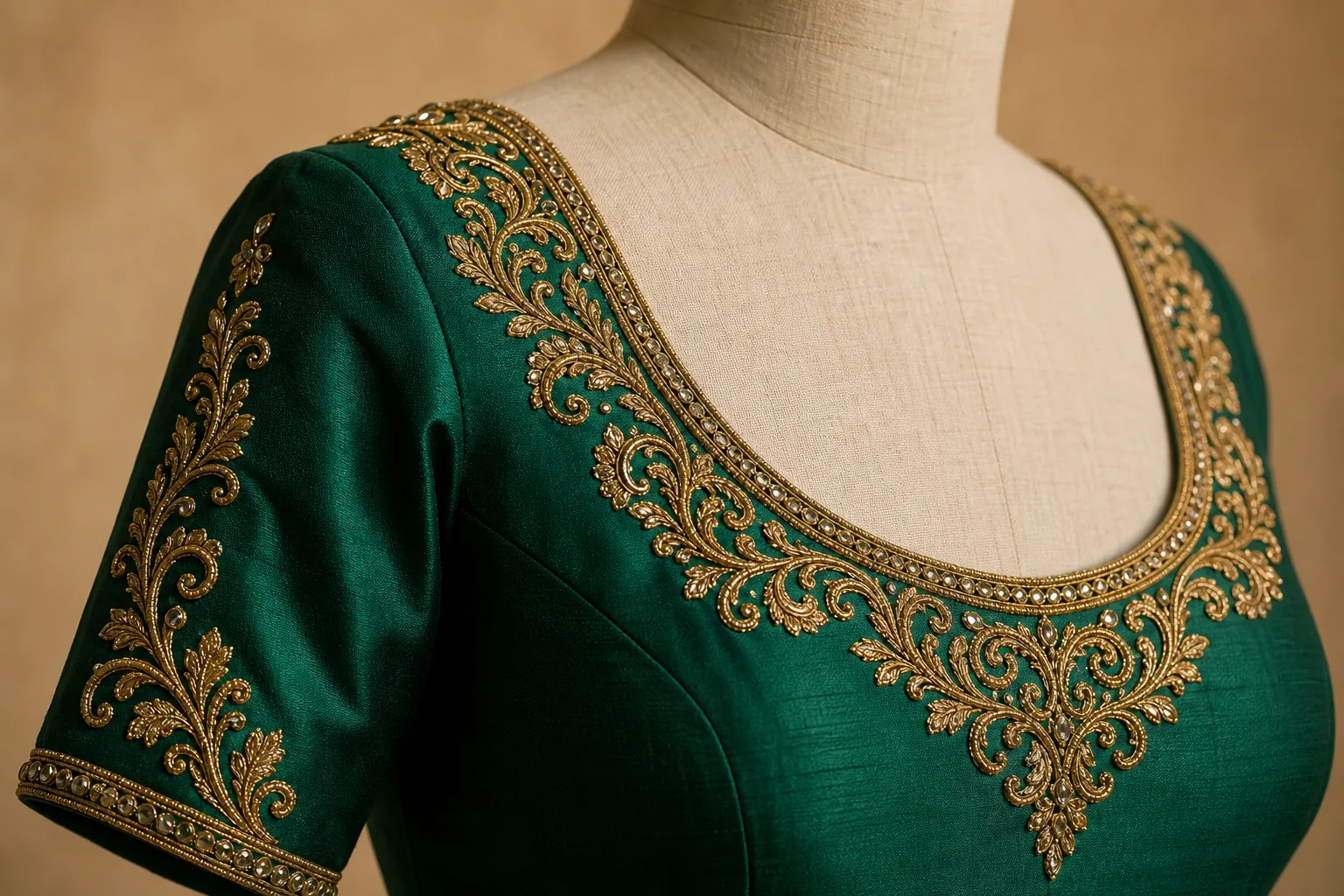
The same hook handles beads, sequins and stones, which is why aari and embellishment so often appear together on the same panel. In parts of South India the technique is known as maggam work.
Where aari work suits best
Aari reads beautifully on anything with a flowing design language:
- Blouses — necklines, sleeves, backs and full coverage
- Sarees — pallu, border and body motifs
- Lehengas — kalis, panels and hem borders
- Kurtis and suits — yokes, daman and sleeves
- Dupattas and stoles
- Bridal wear combined with zardozi and stone work
Aari compared with other techniques
Choosing between techniques is usually about speed, texture and cost:
- Aari vs zardozi — aari is faster and flatter; zardozi is raised, heavier and more expensive
- Aari vs machine — machine is cheaper for repeats; aari gives a hand-worked line machines cannot quite match
- Aari vs plain thread work — aari covers ground faster and handles embellishment in the same pass
Caring for aari embroidery
Aari is a chain stitch, which means a cut thread can travel if it is left unsecured. A few habits protect the work:
- Dry clean rather than machine wash wherever possible
- Store folded with tissue between embroidered layers
- Never iron directly over the embroidery — press from the reverse
- Repair a snagged thread promptly rather than leaving it
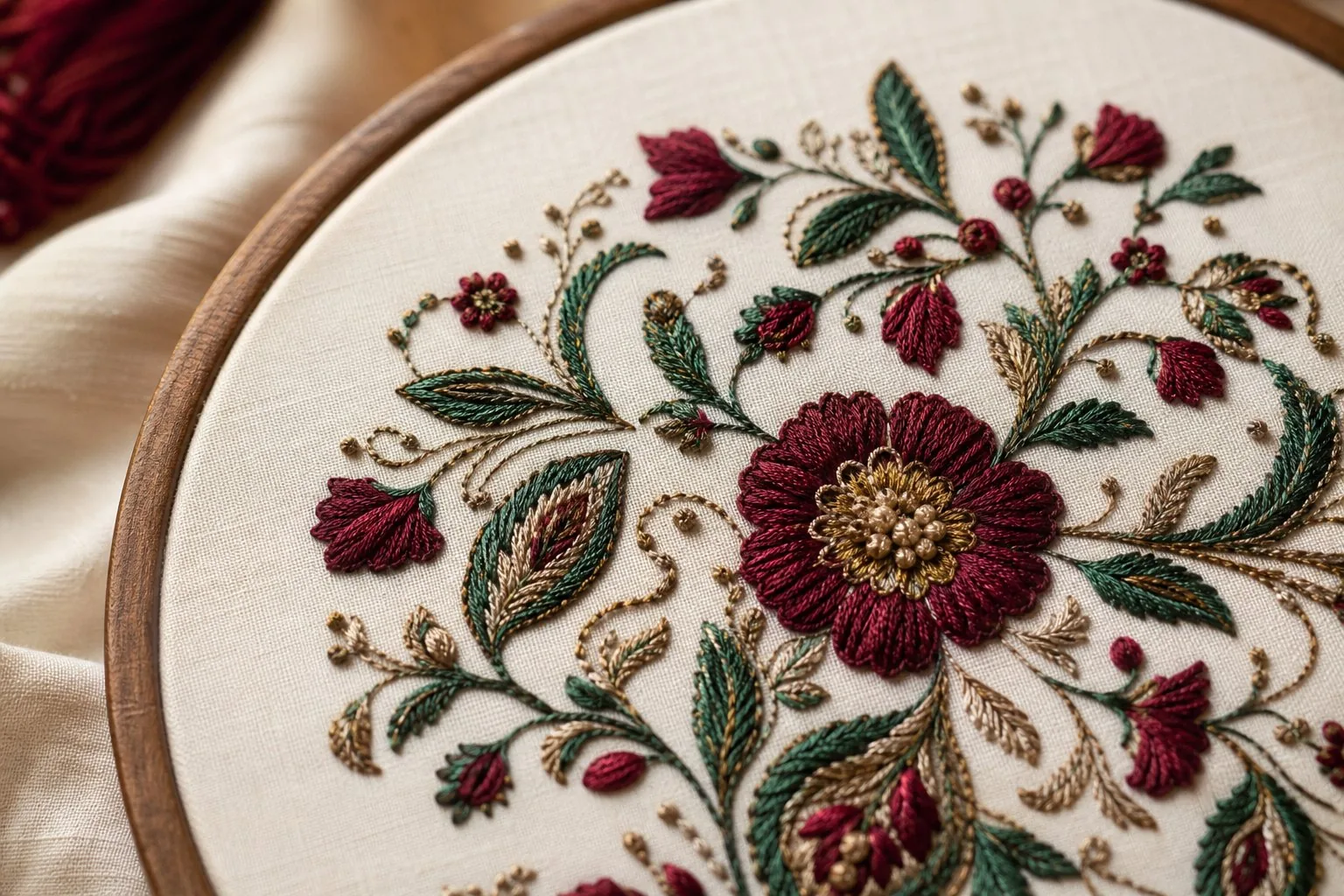
What aari work looks like up close
A hook rather than a needle — which is why aari covers ground fast without losing fineness.
Aari, tambour, zalakdozi — one craft, several names
If you have searched for tambour embroidery and landed here, you are in the right place. Tambour is the European name for the same technique Indian karigars call aari: a fine hook worked from above through fabric held taut on a frame, producing a continuous chain stitch far faster than a needle can.
The craft travelled. It is tambour in French and British ateliers, aari or zalakdozi across India and Kashmir, and luneville when worked bead-side-down on the reverse for couture beading. The hook is the same, the frame is the same, and the chain stitch it leaves is the same.
- Tambour / tambour beading — the term used in the Gulf, Europe and couture
- Aari work — the Indian name, and what we call it in the studio
- Zalakdozi — the Kashmiri term, usually for chain-stitch floor and wall work
- Luneville — tambour worked from the reverse to attach beads and sequins
So whichever word you arrived with, ask for it by name and we will know exactly what you mean. We work the hook daily, on everything from a single blouse neckline to a full bridal panel.
Aari work questions.
What is aari work embroidery?
Aari work is a traditional Indian hand embroidery technique using a fine hooked needle worked on framed fabric. The hook creates a continuous chain stitch, allowing fast, fluid coverage and easy incorporation of beads, sequins and stones.
Is aari work the same as maggam work?
They are essentially the same hooked-needle technique. Maggam is the term more commonly used in South India; aari is the more common term in Mumbai and the north.
Is aari work cheaper than zardozi?
Generally yes. Aari covers area faster, so labour cost is lower for a comparable design. Zardozi is raised metal work and considerably slower.
Can aari work be done on my saree or blouse?
Yes, on most fabrics. Send a photograph of the fabric first — very lightweight or heavily coated bases need special handling or backing.
How do I wash an aari-work garment?
Dry clean where possible. Aari is a chain stitch, so a cut or snagged thread can unravel if left unsecured.
Still have a question? Message us on WhatsApp or send an enquiry.
Send a reference, get a real quotation.
We answer every enquiry personally — no automated replies.