Zardozi embroidery in Mumbai.
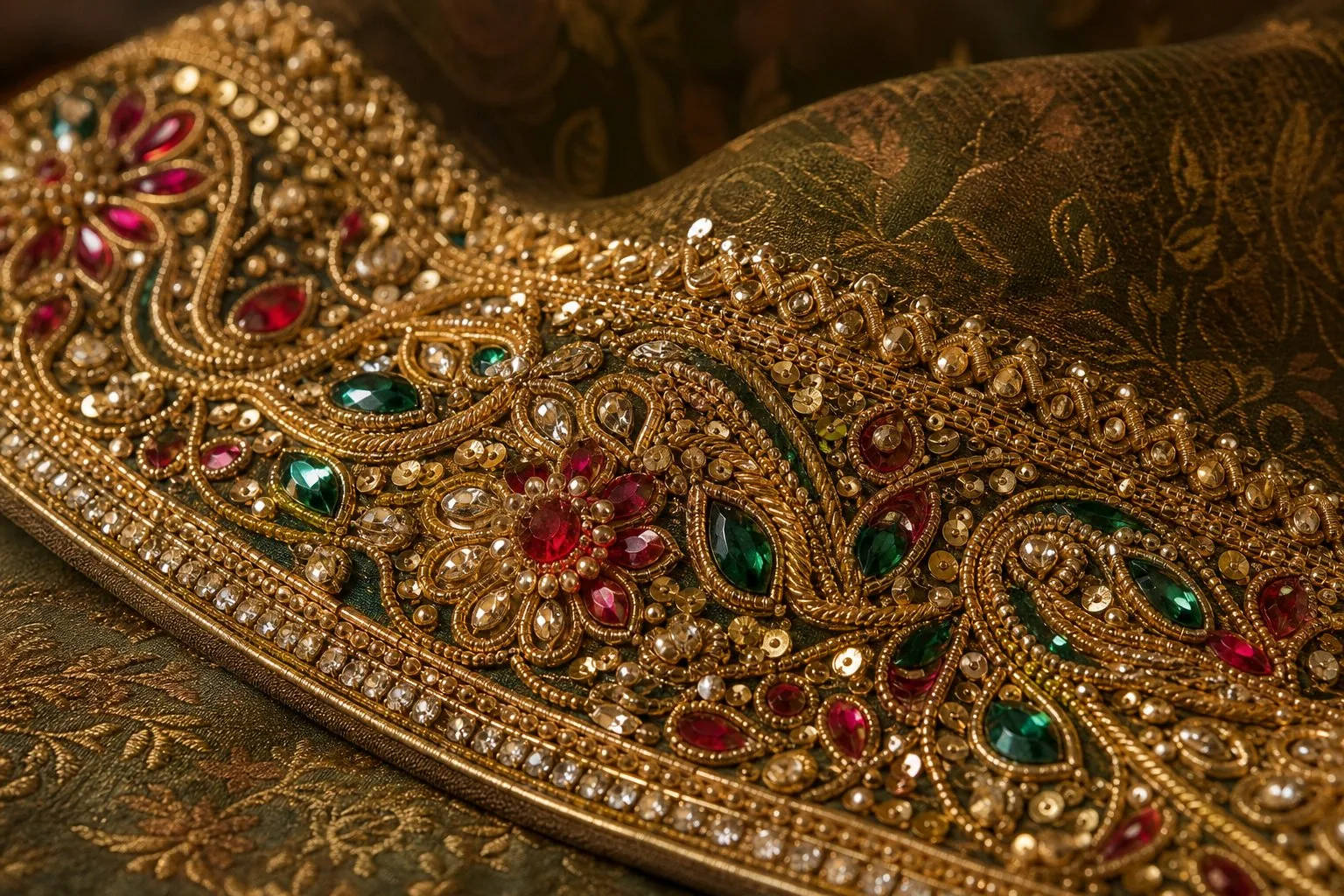
Zardozi is the most opulent embroidery tradition India has — raised metal thread worked by hand into surfaces that catch light from every angle. It is also the slowest, and the most revealing of a karigar’s skill.
 MUMBAI • SINCE 1992
What makes zardozi different
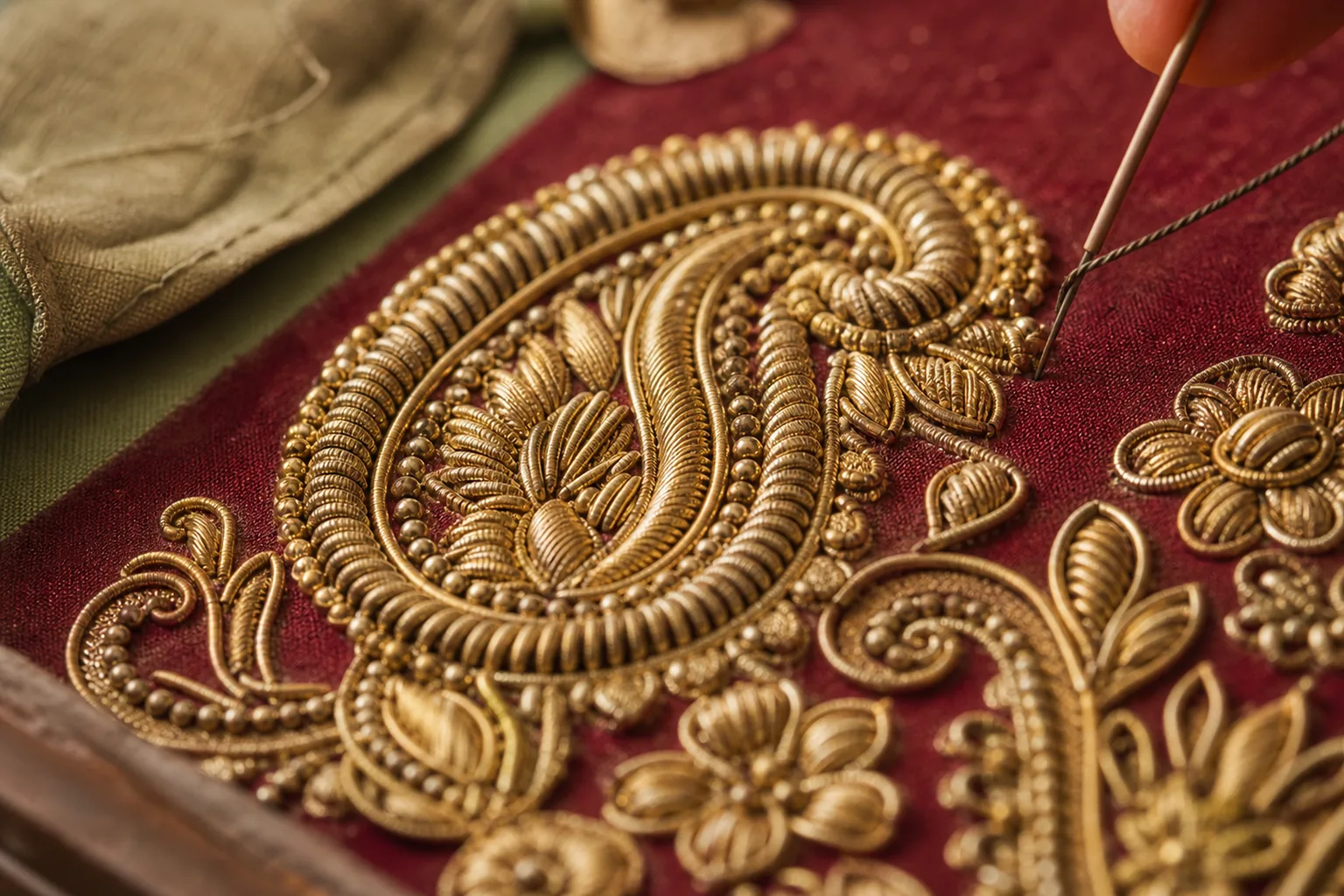
Where most embroidery sits flat, zardozi is built up. Metal thread, coils, sequins and stones are couched onto the surface over padding, creating genuine relief. That dimensionality is why a zardozi panel changes completely as the wearer moves, and why photographs never quite do it justice.
The technique arrived in India centuries ago and matured in the Mughal courts. What survives today in Mumbai workshops is a direct continuation of that lineage, adapted to modern garments.
Where zardozi is used
Because it is heavy and slow, zardozi is reserved for pieces that deserve it:
- Bridal lehengas, blouses and dupattas
- Sherwanis, kurta plackets and stoles
- Reception gowns and statement occasionwear
- Abayas, kaftans and Gulf occasion pieces
- Heirloom sarees and restoration work
- Ceremonial and religious textiles
- Majlis cushions and luxury home textiles
How to judge zardozi quality
Good zardozi and mediocre zardozi look similar in a photograph and entirely different in the hand:
- The reverse. Clean, secured, no loose floats — the surest indicator of discipline
- Consistent relief. Padding should be even, not lumpy in places and flat in others
- Secure couching. Metal thread should not shift when the fabric flexes
- Stone setting. Each stone seated flat and firm, not tilted or proud
- Motif symmetry. Mirrored elements should genuinely mirror
Looking after zardozi
Zardozi is metal. It behaves like metal:
- Dry clean only, and tell the cleaner it is zardozi
- Store flat or rolled, never crushed under other garments
- Keep tissue between the embroidery and the fabric it folds against
- Avoid perfume and moisture directly on the metal thread
- Press only from the reverse, never over the work
Zardozi, in detail
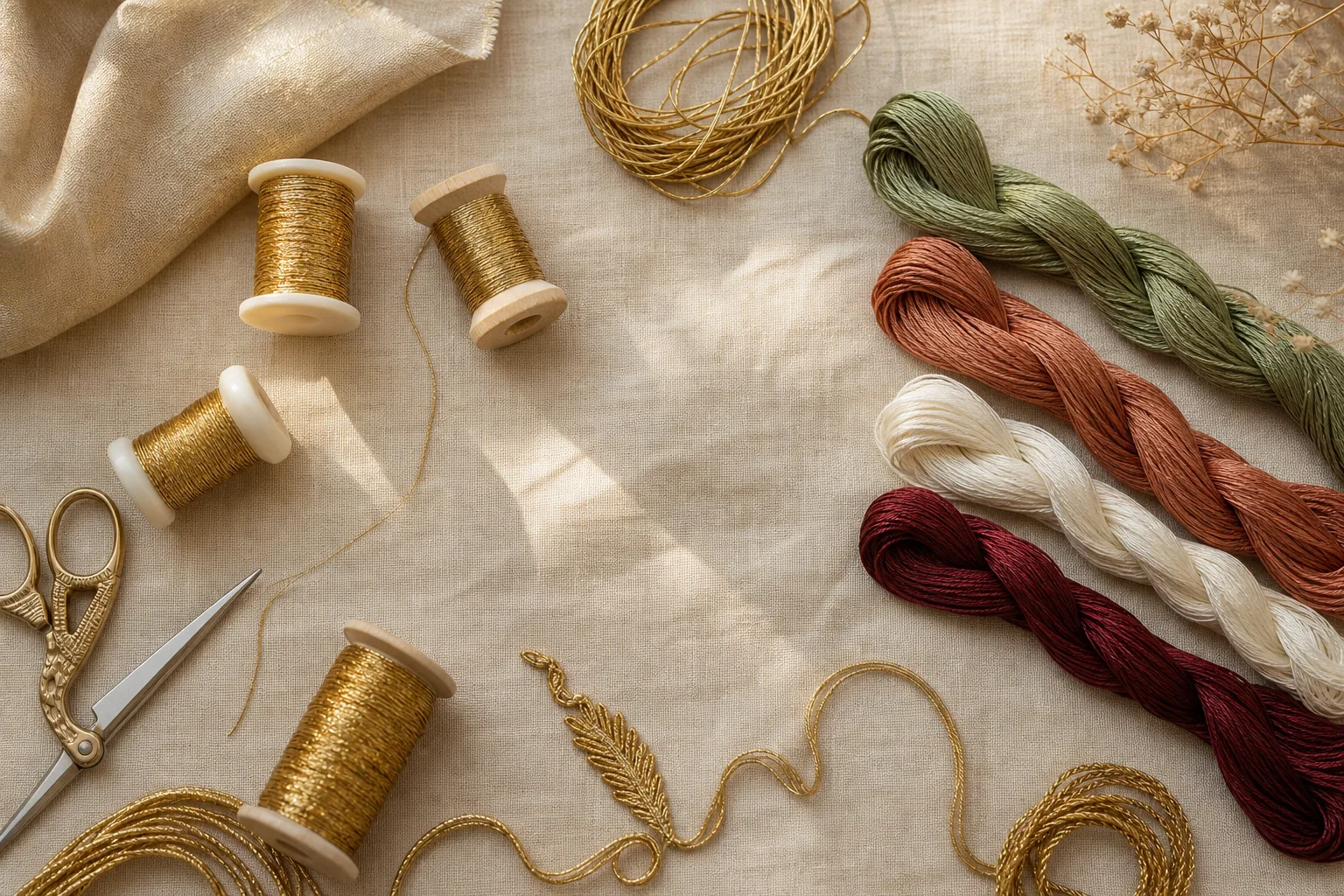
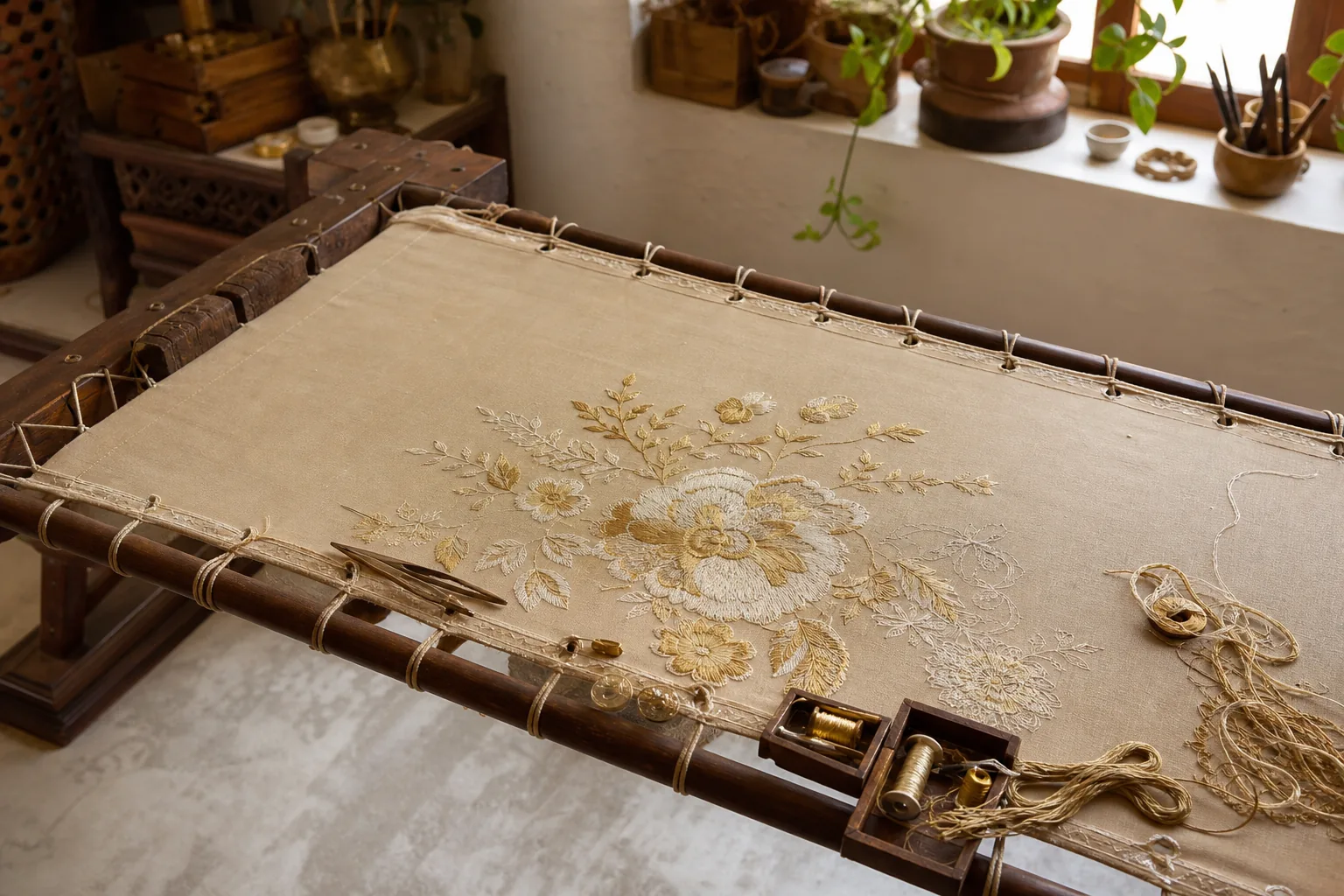
Real zardozi is metal, not metallic thread. That is what gives it the weight and the depth.
Zardozi embroidery questions.
What is zardozi embroidery?
Zardozi is a traditional Indian hand embroidery technique in which metal thread, coils, sequins and stones are couched onto fabric over padding to create raised, dimensional designs. It is most associated with bridal and ceremonial wear.
Why is zardozi more expensive than other embroidery?
It is slow, highly skilled hand work, and the materials — metal thread, coils, stones — cost more than ordinary thread. A dense zardozi panel can take many days of a karigar’s time.
Can zardozi be done on lightweight fabric?
It can, but the fabric usually needs backing or support to carry the weight without sagging. Send a fabric sample so we can advise before you commit.
How do I clean a zardozi garment?
Dry clean only, and tell the cleaner the piece is zardozi. Never machine wash, and never iron directly over the metal work.
Do you do zardozi for abayas and Gulf clients?
Yes. Zardozi and zari work for abayas, kaftans and Gulf occasionwear is a regular part of our work — see our Arabic embroidery guide for how international orders run.
Still have a question? Message us on WhatsApp or send an enquiry.
Send a reference, get a real quotation.
We answer every enquiry personally — no automated replies.