Embroidery for Mumbai's couture and celebrity designers
If your garments are photographed at close range, worn by people the press follows, or archived and re-examined for years, the embroidery on them is held to a different standard. Here is what that standard actually consists of, and how to judge whether a studio can meet it.
Why this work is judged differently
Most embroidery is seen from across a room. Couture embroidery is seen through a lens.
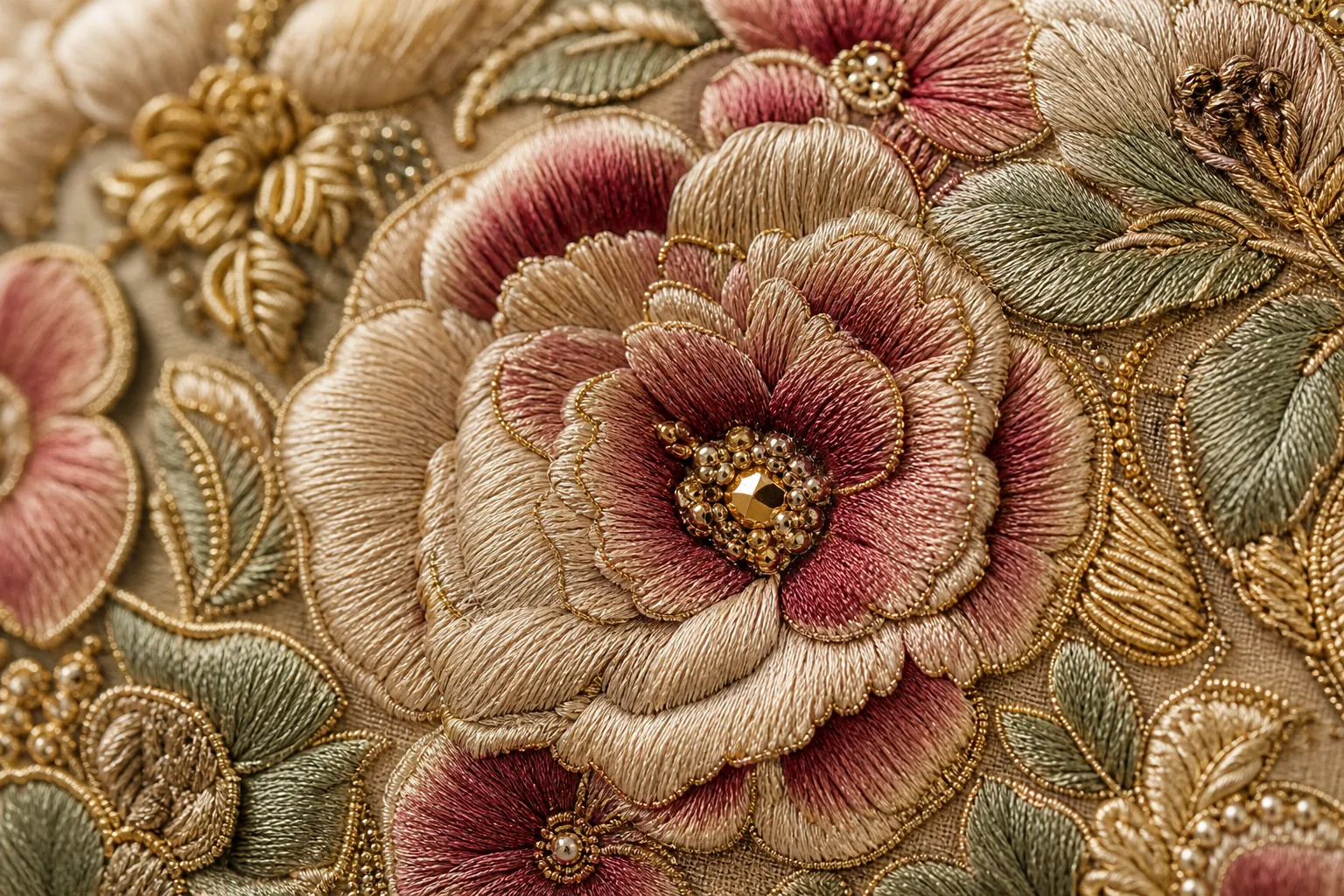
A garment worn at a premiere or shot for a campaign is photographed at resolutions that resolve individual stitches, from angles nobody anticipated, under lights designed to reveal texture. It is then cropped, enlarged and published, and it stays searchable for years. An uneven satin edge that would never register in person becomes permanent at 200% zoom.
That changes what matters. Density that would pass on a retail garment reads as crude. A motif slightly out of register between left and right sleeve, invisible on a hanger, is glaring in a straight-on press photograph. The work has to survive scrutiny that the craftsman will never witness.
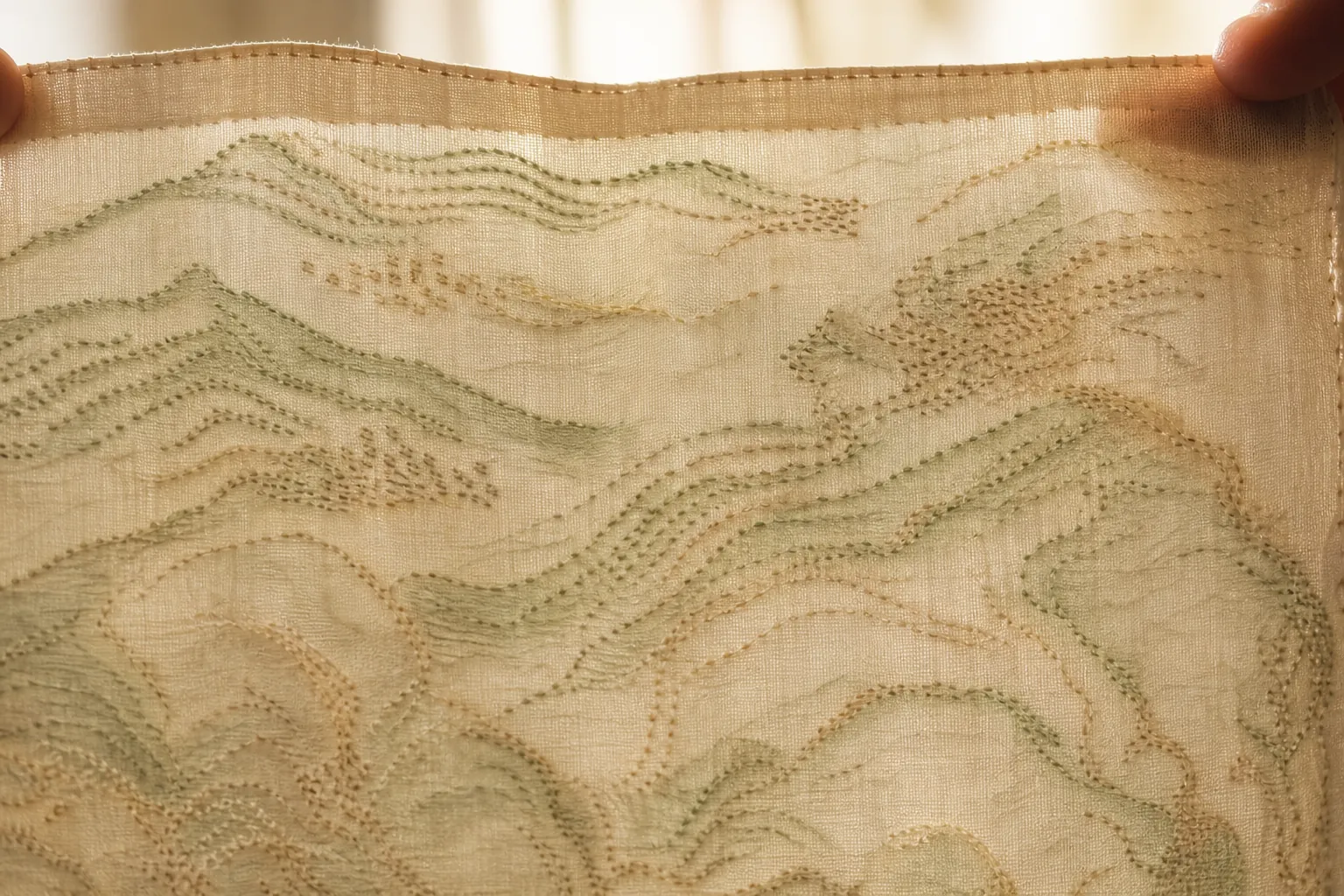
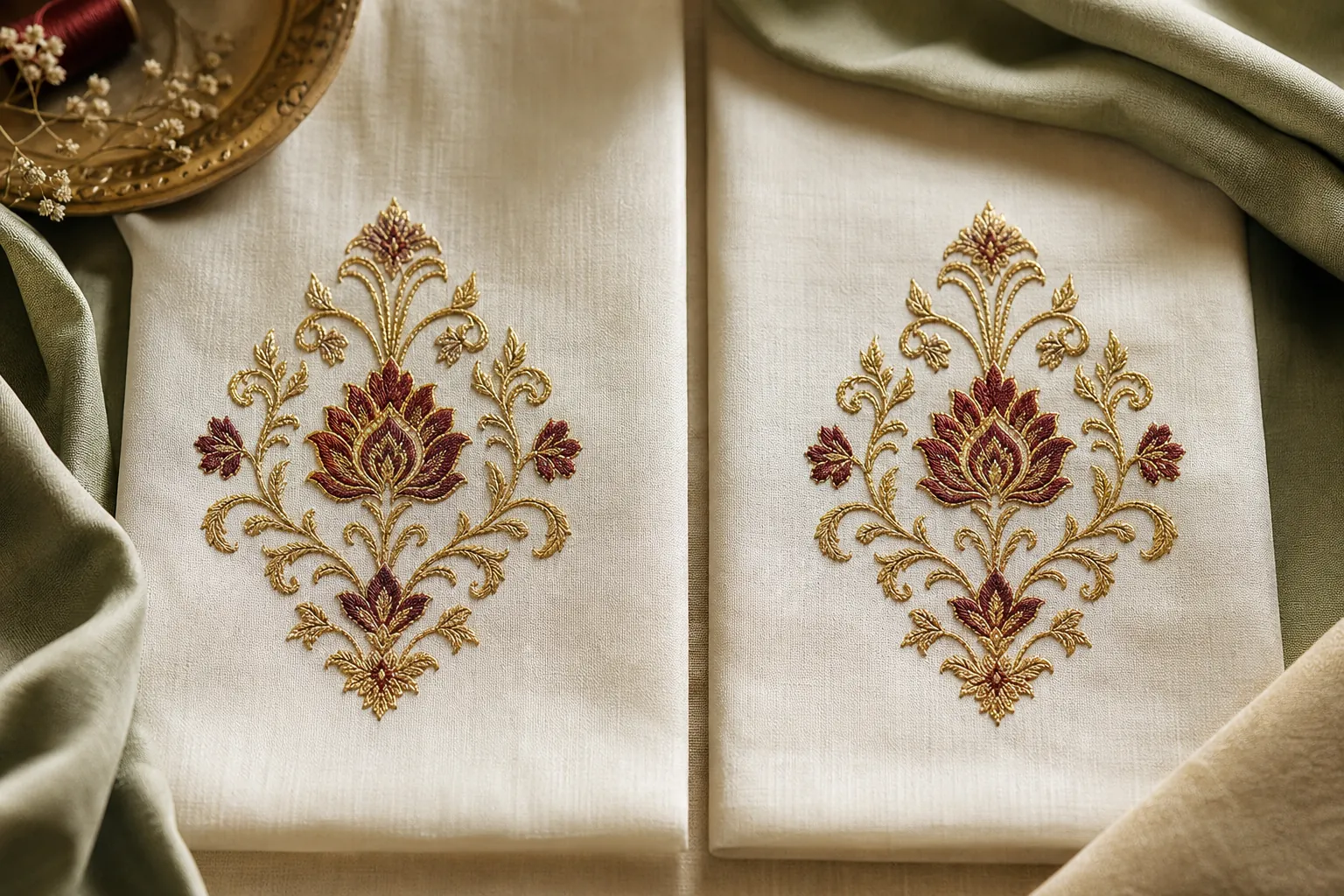
The reverse side tells you everything
If you take one practical thing from this page, take this: turn the sample over.
The front of embroidery can be rescued. A loose area can be worked over, a weak edge tightened, a gap filled. The back cannot be faked. It records exactly how the piece was made, because nobody was performing for an audience while making it.
What you want to see on the reverse:
- Trimmed, secured thread ends — not a mat of loose tails waiting to catch on a lining.
- No knots where knots do not belong. Knots create lumps that print through fine fabric and fail under tension.
- Minimal carrying of thread across the back between motifs, which shadows through on anything sheer.
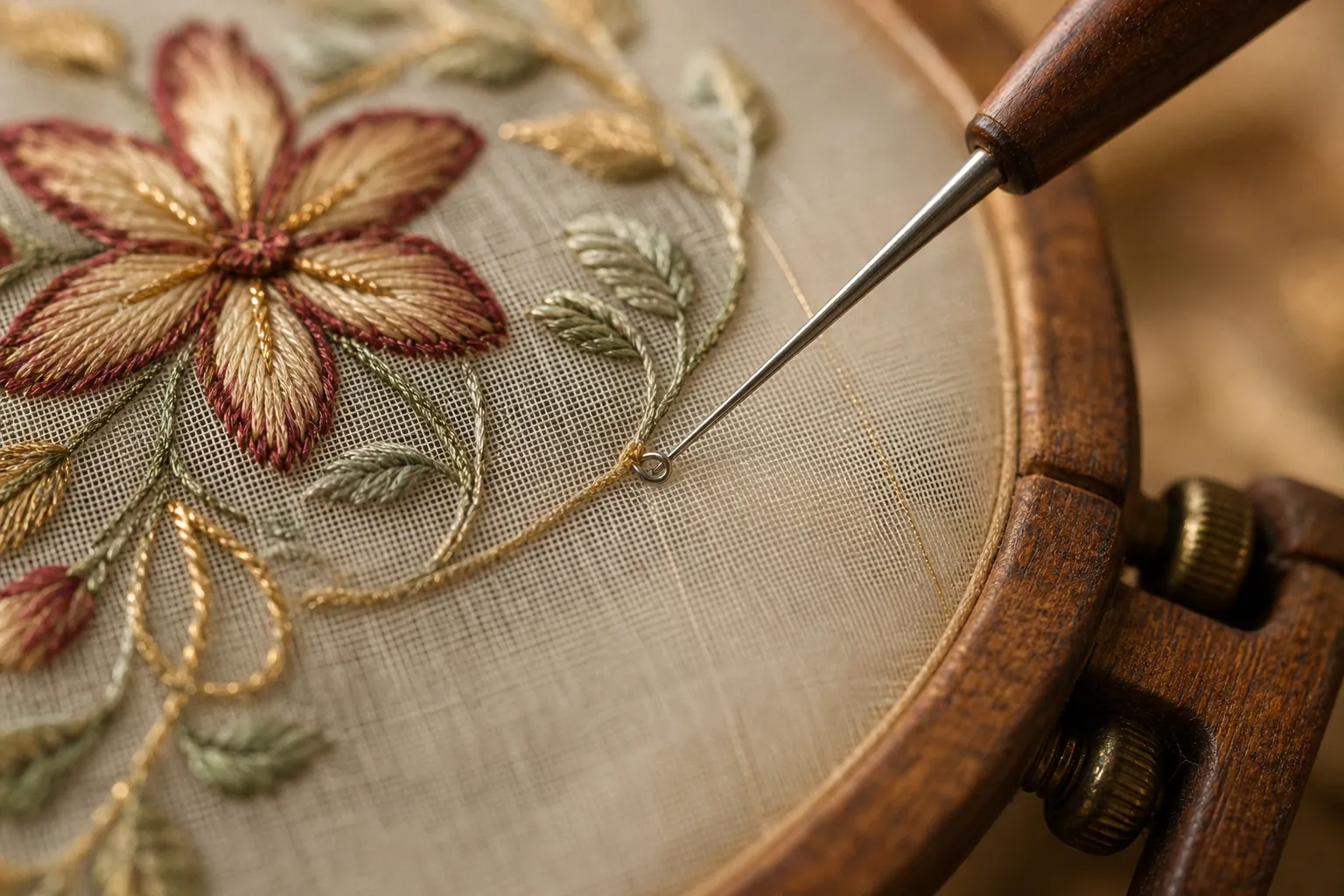
- Even tension — the fabric should lie flat when released from the frame, not ripple.
A studio that keeps a disciplined reverse keeps a disciplined everything. It is the single most reliable tell in this trade, and it takes ten seconds to check.
Repeatability is the real test
Any competent studio can produce one beautiful piece. The question that separates a hobbyist from a production partner is whether they can produce it again, identically, three weeks later, possibly with a different pair of hands on the frame.
Couture work demands this more than people expect. Left and right sleeves must match. A border must continue across a seam without a visible shift. A piece re-made after a fitting change has to match the approved original. And if a garment is damaged days before it is worn, a panel may have to be remade overnight to the same standard.
That is a systems problem, not a talent problem. It needs an approved reference swatch retained in the studio, thread lots secured at the outset, traced placement rather than eyeballed placement, and the discipline to put the same hands on the same motif. We cover how this is set up in sample development.
Confidentiality is the whole relationship
Here is where we will be blunt, because it is the part of this trade people are least honest about.
We do not show client work. Not on this website, not on Instagram, not privately to other clients. Everything in our gallery is our own craftsmanship, materials and process rather than somebody’s finished commission. That is a deliberate decision and it costs us enquiries, because showing recognisable garments is the easiest marketing there is.
We accept that cost for a straightforward reason: a designer’s unreleased collection is the most valuable thing they own, and an atelier that shows you another designer’s work is telling you precisely what it will do with yours.
If you are working at this level, assume the same of anyone you approach. Ask directly what they post and what they have posted before. Ask whether they will sign a confidentiality agreement — for us that is routine, and we are glad to do it before samples are exchanged.
Show dates do not move
A wedding date, a show slot and a shoot call-time are all fixed in a way that normal production deadlines are not. There is no useful apology for being late.
The honest discipline this requires is mostly in what a studio declines. We would rather tell you at the enquiry stage that a timeline is not achievable at the quality you are asking for than accept it, compress the work, and hand you something that embarrasses both of us. A studio that agrees to everything immediately is either not thinking about it or not being straight with you.
Where a deadline is genuinely tight, the levers are real but limited: more hands on one frame, a lighter technique that reads similarly at distance, or reducing coverage while concentrating what remains where the eye lands. We will tell you which applies to your piece.
Why Mumbai, honestly
Mumbai is where Indian fashion is commissioned, and the embroidery ecosystem has grown around that. The practical advantages are real: a deep pool of trained karigars across zardozi, aari, thread and embellishment; established access to zari, dabka, nakshi, stones and specialist thread; and studios accustomed to the rhythm of show calendars and wedding season.
The honest qualification is that the same city contains a very wide range of standards, and the gap between the top and the middle is enormous. Proximity to Mumbai guarantees nothing. Check the reverse of a sample, ask about repeatability, and ask about confidentiality — those three answers will tell you more than any address.
Our own studio is in Dahisar East, in the north of the city. Everything is embroidered by hand there, by craftsmen we work with directly — nothing is outsourced to an unknown workshop or imported and resold. For South Mumbai and suburban clients we collect and deliver, so the location is a logistics detail rather than a limitation.
How to trial a studio without risk
Do not hand an unfamiliar atelier a collection. Give them one swatch, and make it a difficult one.
- Send your actual fabric, not a convenient substitute. How thread sits on your cloth is most of what you are testing.
- Choose the hardest element of your design, not a representative one. Anyone can work the easy part.
- Ask for the same motif twice on one swatch. Compare them against each other.
- Turn it over.
- Note how they communicated — whether they asked sensible questions before starting, flagged problems early, and met the date they gave you. That behaviour predicts the production run far better than the swatch does.
We are happy to be tested exactly this way, and we would rather be tested on one swatch than trusted on a promise. Send the brief on WhatsApp — here is what we need — and we will tell you honestly whether your piece is work we should be doing.
Tell us what you want made.
Send a reference photo, your fabric and your deadline. We reply with honest advice and a clear quotation.
Frequently asked questions
Do you work with celebrity designers?
We work with fashion designers, boutiques and labels under confidentiality, and we do not discuss who. That protection applies to every client without exception — which is rather the point. If we talked about our clients with you, we would talk about you with them.
Will you sign a confidentiality agreement?
Yes, and we would expect to. Much of our work is unreleased collections, so this is routine. We are glad to have an agreement in place before any samples or designs are exchanged.
Can I see examples of garments you have made for clients?
No, and we would ask you to treat that as reassurance. We show our own craftsmanship, materials and process in the gallery instead. An atelier that shows you another designer’s work is telling you what it will do with yours.
How do I judge whether a studio is good enough for couture work?
Ask for a sample on your own fabric, using the hardest element of your design, with the same motif worked twice. Then turn it over. The reverse records how the piece was really made, and it cannot be faked.
How do you keep left and right sides matching?
Traced placement rather than eyeballed placement, an approved reference swatch retained in the studio, thread lots secured at the start, and the same hands on the same motif throughout the run.
Can you work to a show or wedding deadline?
Often yes, and we will tell you plainly at the enquiry stage if we cannot. We would rather decline a timeline than accept it, compress the work and deliver something below standard.
Are these made in India?
Yes. Every piece is embroidered by hand in our own studio in Dahisar East, Mumbai, by craftsmen we work with directly. Nothing is outsourced to a third party or imported and resold.
Still have a question? Message us on WhatsApp or send an enquiry.