Which embroidery is most expensive, and why?
People usually assume the gold makes it expensive. It does not. Almost all of the cost in hand embroidery is time, which is why two pieces using identical materials can differ fourfold in price.
The short answer
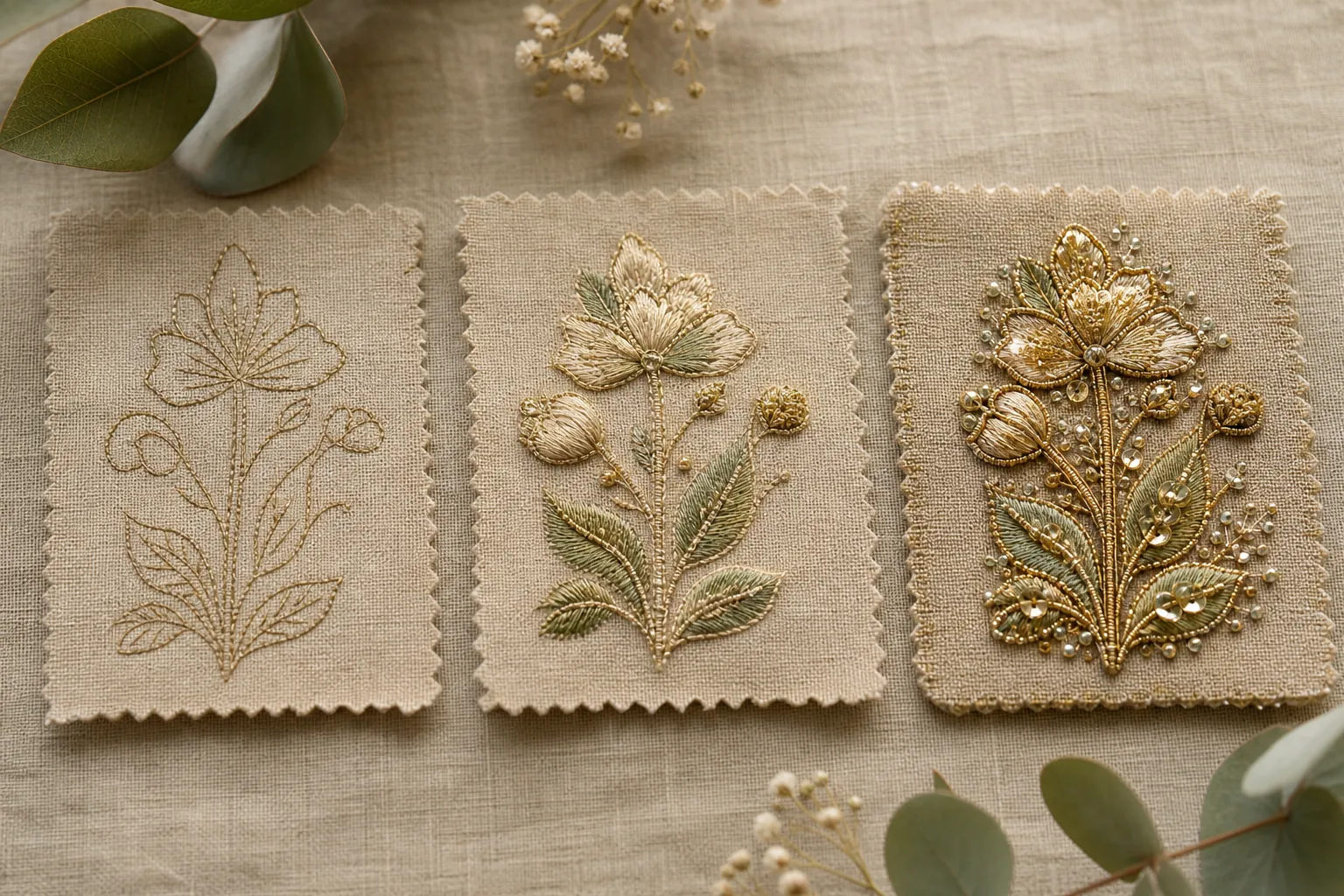
Zardozi is the most expensive hand embroidery, and hand-guided machine work is the cheapest. Between those two sit aari work, thread shading and embellishment, roughly in that order of cost.
But the technique is only half the answer. A lightly outlined zardozi motif can cost less than a densely filled thread design, because coverage matters as much as method. Density and technique together decide the price; the garment itself barely matters.
Techniques ranked, cheapest to dearest
Assuming the same area covered on the same fabric, this is the order we see in practice.
- 1. Hand-guided machine work — by far the lowest cost per piece. A craftsman steers the fabric under a single needle, covering ground several times faster than any hand technique. Ideal for repeat designs and bulk runs.
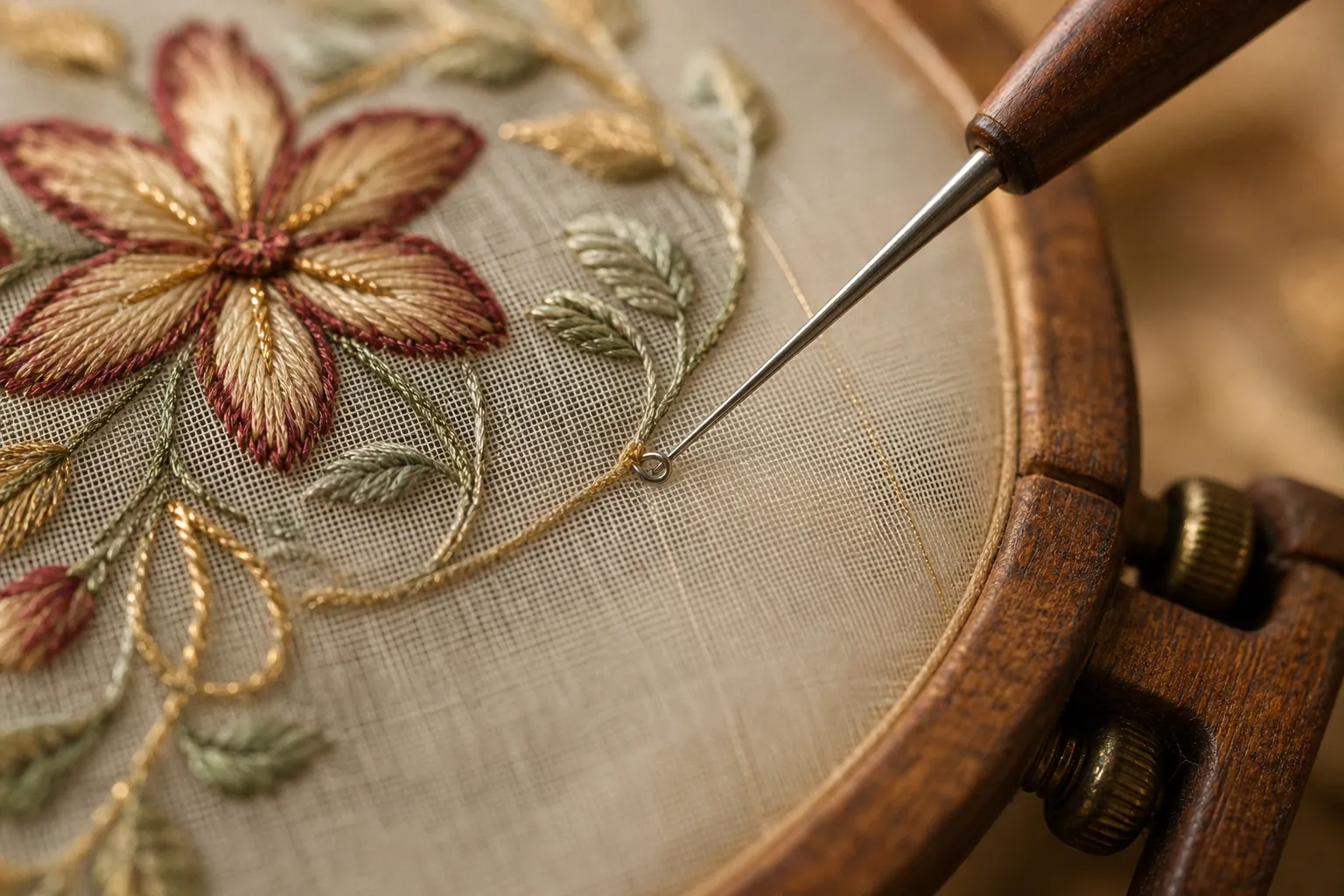
- 2. Aari / tambour hook work — the best value of any genuinely hand technique. The hook does not pass fully through and back like a needle, so a filled area goes much faster. Our usual recommendation when budget matters.
- 3. Flat zari couching — metallic thread laid on the surface and stitched down. Gives a gold look without the slow build-up of raised work.
- 4. Thread and silk shading — satin and long-and-short stitch. Moderate on outlines, expensive once you ask for properly shaded petals, because shading cannot be rushed.
- 5. Sequin, bead and cutdana — material cost plus placement time. Scales badly with density: light scatter is cheap, full coverage is not.
- 6. Hand-set stone and crystal — each stone is placed and secured individually. Note the word hand-set; glued stones are cheaper and they fail in the wash.
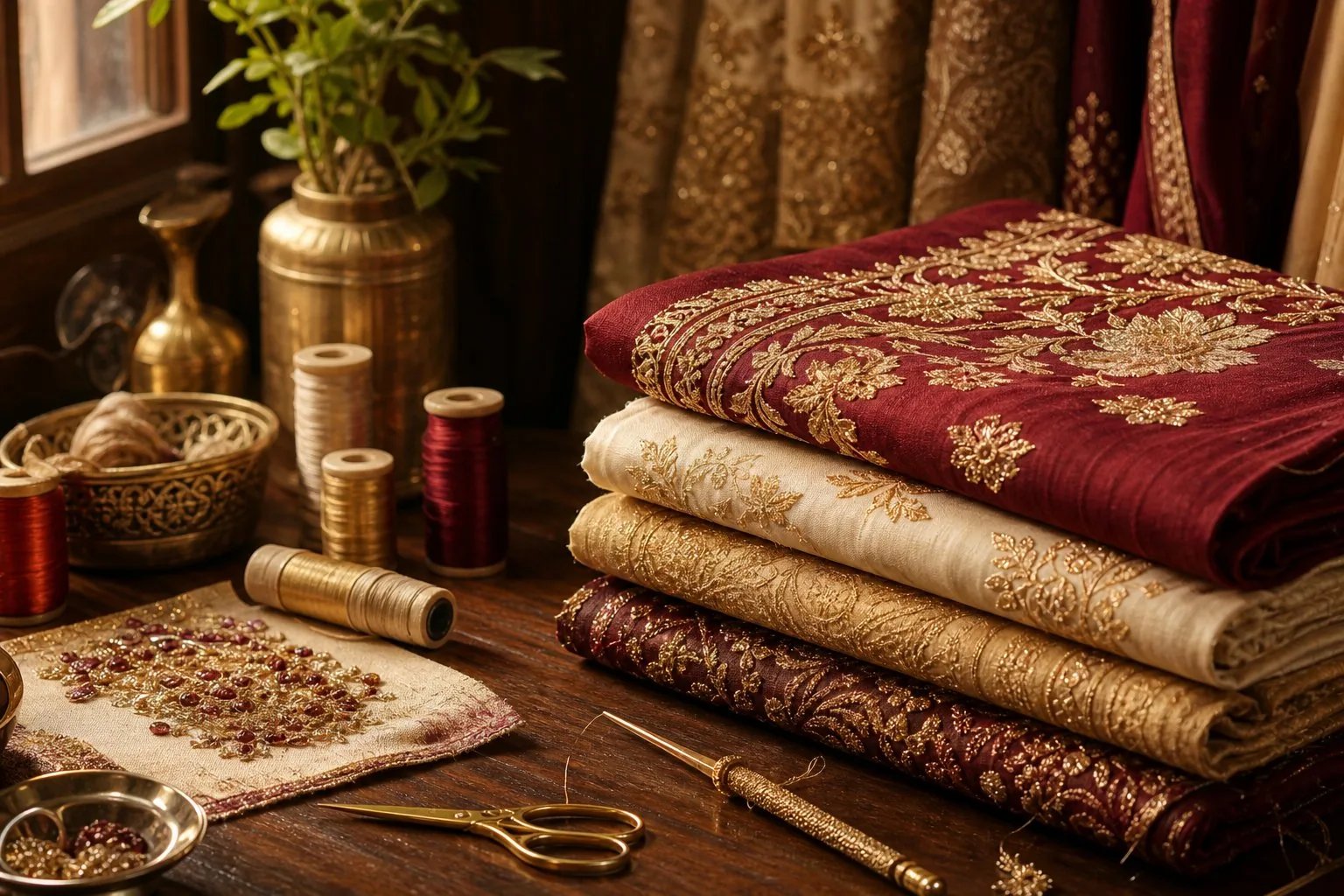
- 7. Zardozi — the most expensive. Dabka, nakshi, kora and salma are cut and stitched down one element at a time to build real dimensional height. There is no faster way to do it properly.
Why labour, not materials, sets the price
This surprises most people. Real zari thread and hand-set stones do carry a material cost, but on a typical commission the hours still dominate.
A densely worked bridal lehenga panel can occupy a frame and a pair of hands for weeks. The same panel outlined rather than filled might take days. Identical fabric, identical thread, completely different invoice — because you are buying the craftsman’s time, not a quantity of gold.
Four things move that time:
- Coverage — the single biggest factor. Filled areas cost multiples of outlined ones.
- Technique — as ranked above.
- Fabric — delicate grounds like organza, net and tissue need backing and a slower hand, so the same design costs more on them than on raw silk.
- Deadline — compressing three weeks into eight days means more hands on one frame.
Getting close to an expensive look for less
We would rather talk you into the right technique than the dearest one. These four substitutions genuinely work.
- Outline instead of fill. A strong outlined motif in zari reads as rich from normal viewing distance and costs a fraction of a filled one.
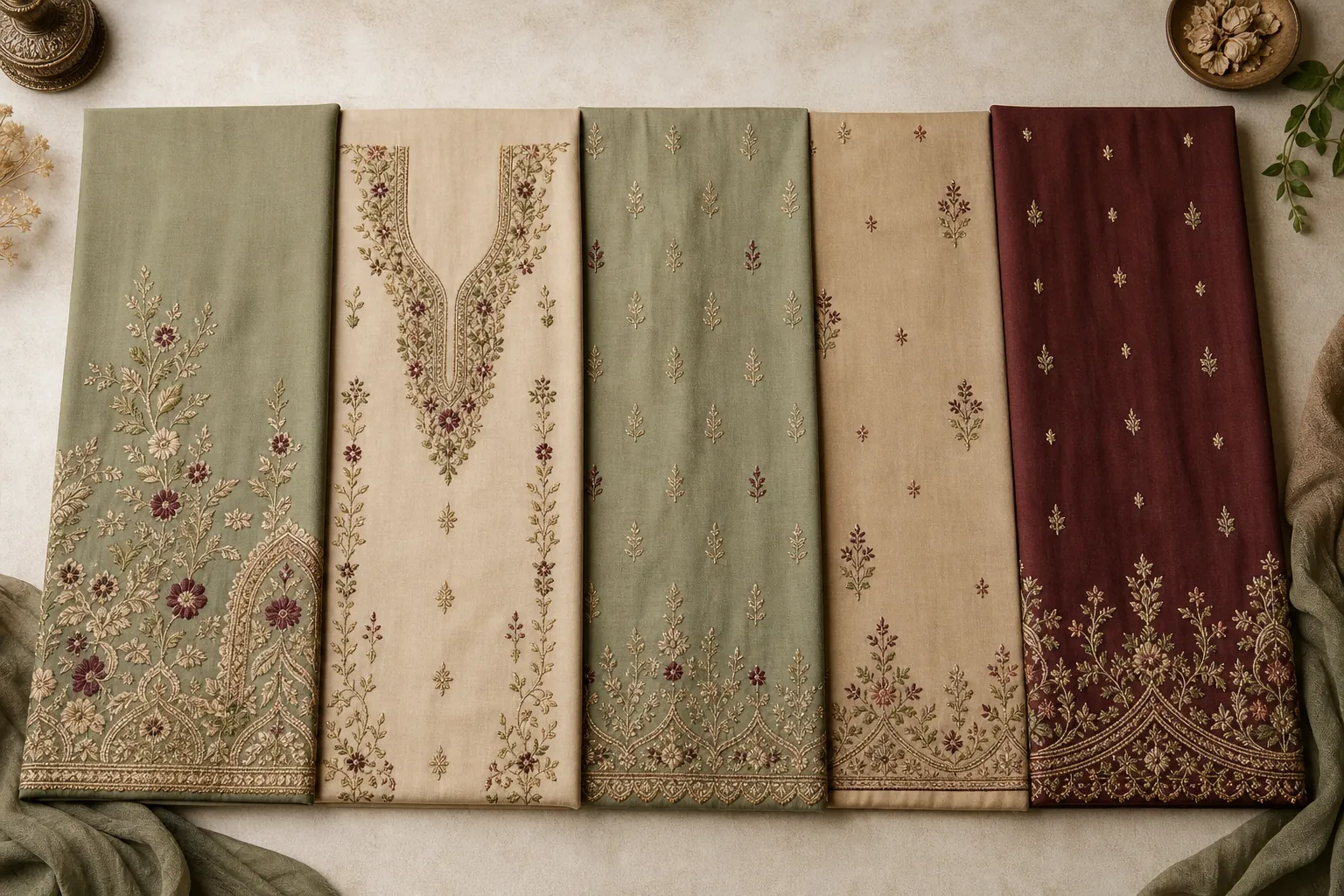
- Concentrate, do not spread. One beautifully worked neckline on plain fabric looks more expensive than thin work scattered over a whole garment. Concentration beats coverage, every time.
- Flat zari instead of raised zardozi. You keep the gold and lose most of the hours.
- Aari for the groundwork, hand for the focal point. Mixing techniques on one garment is normal and is often the smartest way to spend a budget.
If a design is not worth what it would cost to execute, we say so before you commit. That conversation is free.
When the expensive option is worth it
Sometimes it genuinely is, and pretending otherwise would be dishonest.
- Garments examined closely. A bridal blouse is photographed from every angle and kept for decades. Fine shading and real zardozi reward that scrutiny; a shortcut shows.
- Heirloom and restoration work. If you are matching surviving old zardozi, the new work has to meet the old standard or the repair is visible forever.
- Pieces that must photograph well. Raised work catches light in a way flat work cannot. For anything shot under lights, dimension earns its cost.
- Anything a label puts its name on. For boutiques, the finish is the brand.
Ready to get a figure for your own piece? Here is exactly what we need to quote — a photo on its own is not enough, and this explains why.
Why Indian hand embroidery costs less
Clients in the Gulf, the UK and the US regularly ask whether the work is actually made in India, and whether that explains the price. The honest answer to both is yes.
Every piece we make is embroidered by hand in our own studio in Dahisar East, Mumbai, by craftsmen we work with directly. Nothing is outsourced to an unknown workshop and nothing is imported and resold under our name. That matters practically as well as ethically: it is why we can answer a technical question about any piece, and why a mid-project change does not require negotiating with a chain of subcontractors.
Hand embroidery is priced in labour hours wherever it is made. India has generations of trained karigars and a cost base that means the same quality of hand work costs a fraction of what commissioning it in London or Dubai would. The craft is not cheaper; the hours are. That is the whole arbitrage, and it is why Gulf and Western clients have sourced embroidery from Indian ateliers for a very long time.
You can see the work itself in our gallery — 46 photographs of our own craftsmanship and materials. We do not display client commissions, because designers and boutiques send us unreleased collections, so what you see is technique rather than other people’s orders.
Tell us what you want made.
Send a reference photo, your fabric and your deadline. We reply with honest advice and a clear quotation.
Frequently asked questions
Which embroidery is the most expensive?
Zardozi, because every raised metal element — dabka, nakshi, kora and salma — is cut and stitched down individually. Hand-set stone and crystal work is close behind. The most economical is hand-guided machine work, then aari or tambour hook work.
How much does hand embroidery cost?
It is priced by labour hours rather than by garment, so coverage and technique decide it. A light outlined neckline is the entry point and a densely worked bridal panel is the top end, with several times between them. Send a photo for a real figure the same working day.
Why is zardozi so expensive?
Because it cannot be hurried. Each coiled metal element is cut to length and stitched down one at a time to build dimensional height. There is no faster method that produces the same result, so you are paying for hours of skilled hand work.
Is hand embroidery worth the extra cost over machine?
For a garment examined closely — bridal wear, heirloom pieces, anything photographed — yes. For repeat designs across many pieces, or a tight budget and deadline, hand-guided machine work is genuinely the better answer and we will say so.
Are these made in India?
Yes. Everything is embroidered by hand in our own studio in Dahisar East, Mumbai, by craftsmen we work with directly. Nothing is outsourced to a third party or imported and resold.
Can I see pictures of the work before ordering?
Yes. The gallery has 46 photographs of our own craftsmanship, materials and process. We do not display client commissions, so what you see is technique rather than other customers’ finished orders.
Still have a question? Message us on WhatsApp or send an enquiry.