Saree embroidery: pallu, border and blouse
A saree is six yards of fabric that drapes, folds and moves. Embroidery that looks perfect laid flat on a table can disappear entirely once it is worn — which is why placement on a saree is a different skill from placement on a stitched garment.
Design for the drape, not the table
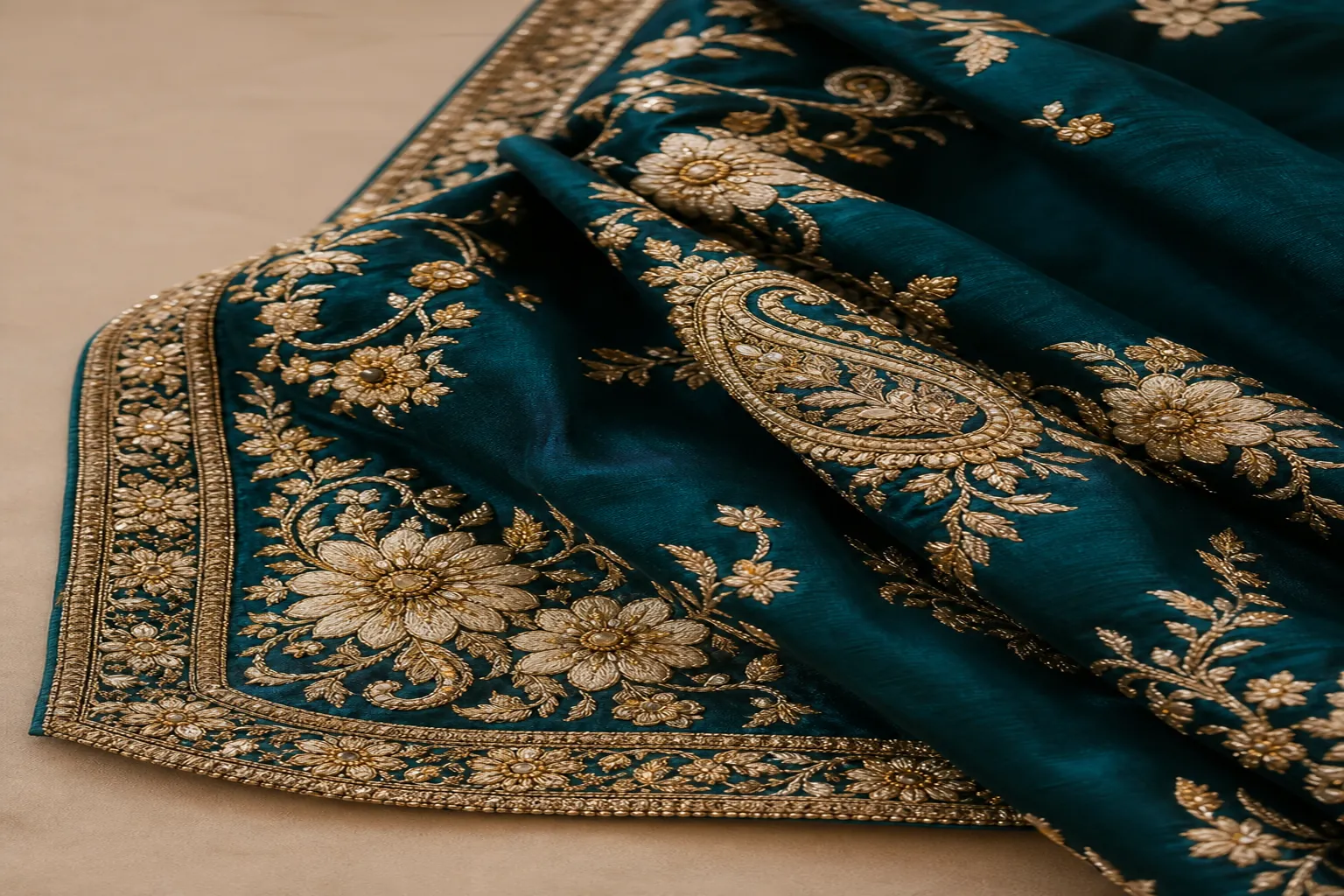
This is the single thing that separates a saree that works from one that does not. Laid flat, a saree is a rectangle. Worn, roughly a third of it is hidden in pleats, a third wraps the body, and the pallu falls over the shoulder where everybody looks.
Embroidery placed without accounting for that gets lost in the pleats or bunches awkwardly at the waist. Before we quote, we ask how you drape — which shoulder, how the pleats fall, whether the pallu is pinned or loose. It changes the design.
The four placements
- Pallu — the end that falls over the shoulder. The focal point of the whole saree and where heavy work belongs. A fully worked pallu is a large surface, so it is also the most expensive single element.
- Border — runs the full length. Visible along the hem when worn and framing the drape. A strong border with a plain body is a classic, economical and extremely effective combination.
- Butti / all-over — small motifs scattered across the body. Expensive because the labour is spread over six yards, but unmatched for festive and bridal pieces.
- Skirt border (lower hem) — a deeper band at the bottom. Adds weight so the saree falls better, which is a practical benefit as much as a visual one.
Most commissions are pallu plus border. That combination covers what is seen and leaves the pleated section plain, which is both cheaper and better design.
The blouse is half the commission
People budget for the saree and forget the blouse, then discover that a richly worked saree with a plain blouse looks unfinished. The blouse carries the neckline, sleeves and back — and the back is what people see for most of an evening.
- Neckline — front and back, the highest-impact area per hour of work.
- Back and tie detail — frequently the most photographed part of an outfit.
- Sleeves — from a narrow cuff band to full coverage.
- Tassels and latkans — a small finishing detail that makes a blouse look properly made.
Design the saree and blouse together, as one family. They do not need to match, but they need to belong to each other.
Which saree fabrics take embroidery
- Silk and raw silk — the best base. Carries heavy zardozi and zari without distorting.
- Georgette — drapes beautifully, but heavy work pulls it out of shape. Needs backing and restraint.
- Chiffon — the most delicate. Light thread and sequin work only.
- Organza and tissue — sheer, so the reverse shows. Technique choice matters more here than anywhere else.
- Net — excellent for appliqué, sequin and stone, which read well against the open ground.
- Cotton and linen — forgiving and underrated. Beautiful with thread and mirror work.
- Banarasi and woven silks — already patterned, so added embroidery must complement the weave rather than fight it. Send a photo before committing.
Restoring an old saree
A large part of our saree work is not new embroidery at all. It is bringing back a piece that already matters to somebody.
- Tarnished zari — old metal thread darkens. Some can be cleaned, some needs replacing section by section.
- Broken or missing zardozi — individual elements re-stitched and matched to the surviving work.
- Damaged borders — re-worked or carefully replaced, keeping the original where possible.
- Transferring a border — lifting intact old work onto new fabric when the original ground has perished. This is often the right answer for a grandmother’s saree.
Send a clear photograph of the damage. We will tell you honestly whether it can be matched — and occasionally that it should be left alone, because the age is part of the piece.
Cost and timing
A saree pallu typically runs two to four weeks of working time; a border depends on length and density; an all-over butti saree is a substantially larger commission. Add one to two weeks at the front to agree the design and quote, and schedule earlier for wedding season.
Price follows coverage, technique and fabric rather than the garment, so a photograph of the saree plus a reference for the design gets you a real figure the same working day.
Tell us what you want made.
Send a reference photo, your fabric and your deadline. We reply with honest advice and a clear quotation.
Frequently asked questions
Where should embroidery go on a saree?
The pallu and the border, in most cases. Those are the parts visible when draped. Work placed on the pleated section is largely hidden, so it is usually wasted budget.
Can you embroider a saree I already own?
Yes, that is a large part of our saree work. Bring it to the Dahisar East studio or courier it, and we will advise on whether the fabric will carry the design.
Can you restore the zari on an old saree?
Often yes. Tarnished zari can sometimes be cleaned and sometimes needs replacing section by section, and intact old borders can be transferred onto new fabric. Send a photo of the damage for an honest answer.
How long does saree embroidery take?
A pallu is usually two to four weeks of working time. Borders depend on length and density, and an all-over design is considerably longer. Add one to two weeks to agree the design first.
Should the blouse be embroidered to match?
Design them together as one family rather than identical. A heavily worked saree with a completely plain blouse tends to look unfinished, and the blouse back is seen all evening.
Which saree fabric is best for heavy embroidery?
Silk and raw silk carry weight best. Georgette and chiffon need backing and a lighter hand, and on Banarasi or woven silks the embroidery has to complement the existing weave.
Still have a question? Message us on WhatsApp or send an enquiry.