Kurti and suit embroidery: designs, placement and cost
Kurtis and suits are the garments we are asked about most often and the ones people get wrong most often — usually by putting good embroidery in the wrong place, or by choosing a design the fabric cannot carry.
Placement decides everything
Before technique, before thread, before budget: decide where the work goes. The same motif reads completely differently depending on where it sits, because a kurti moves and the eye follows particular lines.
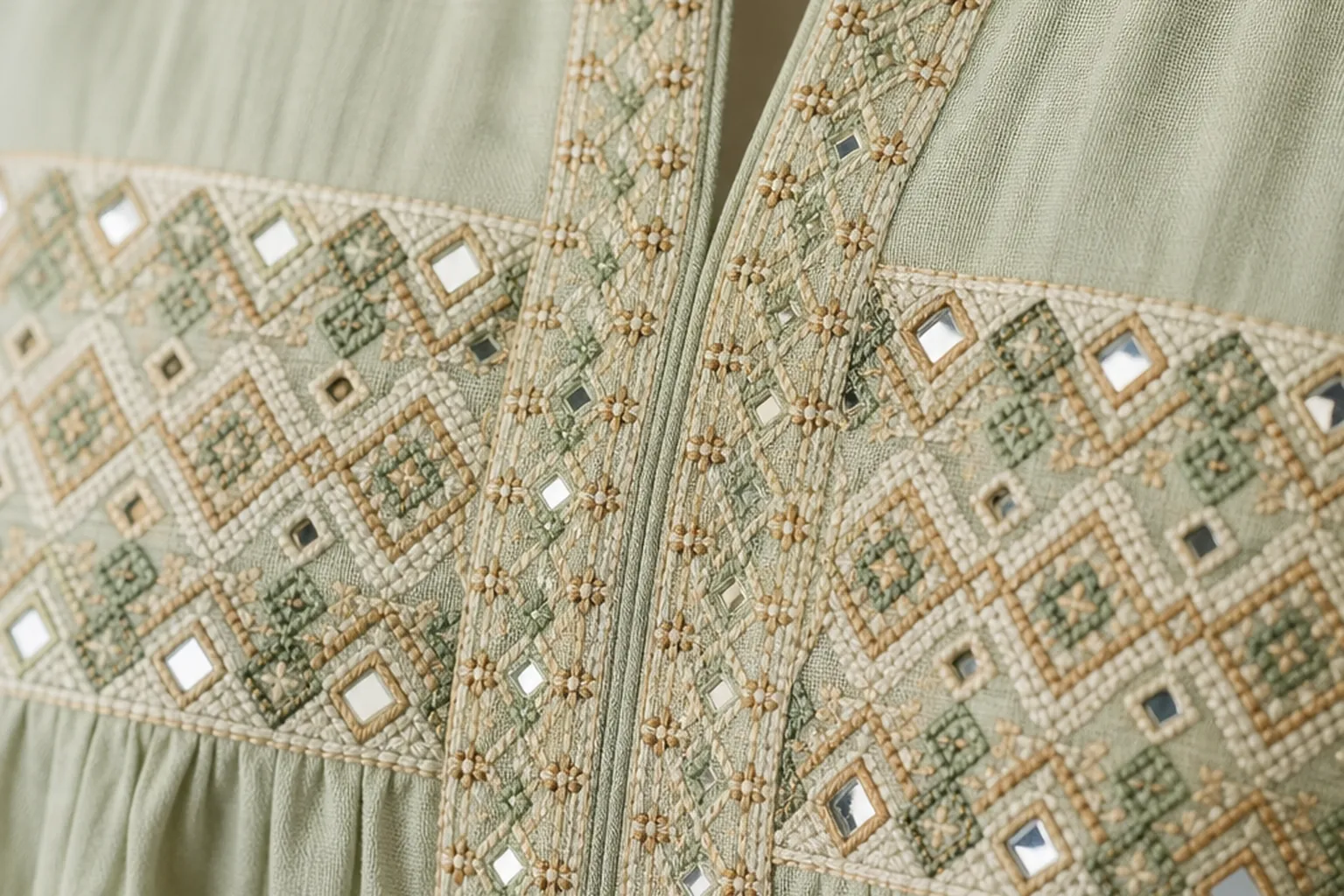
- Yoke — the most flattering and the most requested. Draws the eye up to the face. Works on almost every body type and almost every fabric.
- Placket and neckline — a narrow vertical band. The most economical placement for visible impact, because the worked area is small.
- Daaman (hem border) — anchors a flowing kurti and stops a long silhouette looking empty. Reads beautifully when walking.
- Sleeves and cuffs — usually a supporting element. Strong on their own only when the rest is plain.
- All-over butti — scattered small motifs. Expensive, because the labour is spread across the whole garment, but unmatched for a festive piece.
- Side panels — underused and very effective on straight-cut kurtis.
A reliable rule: choose two placements, not four. Yoke plus daaman is a complete design. Yoke plus daaman plus sleeves plus side panels is usually a kurti fighting with itself.
Which technique for which look
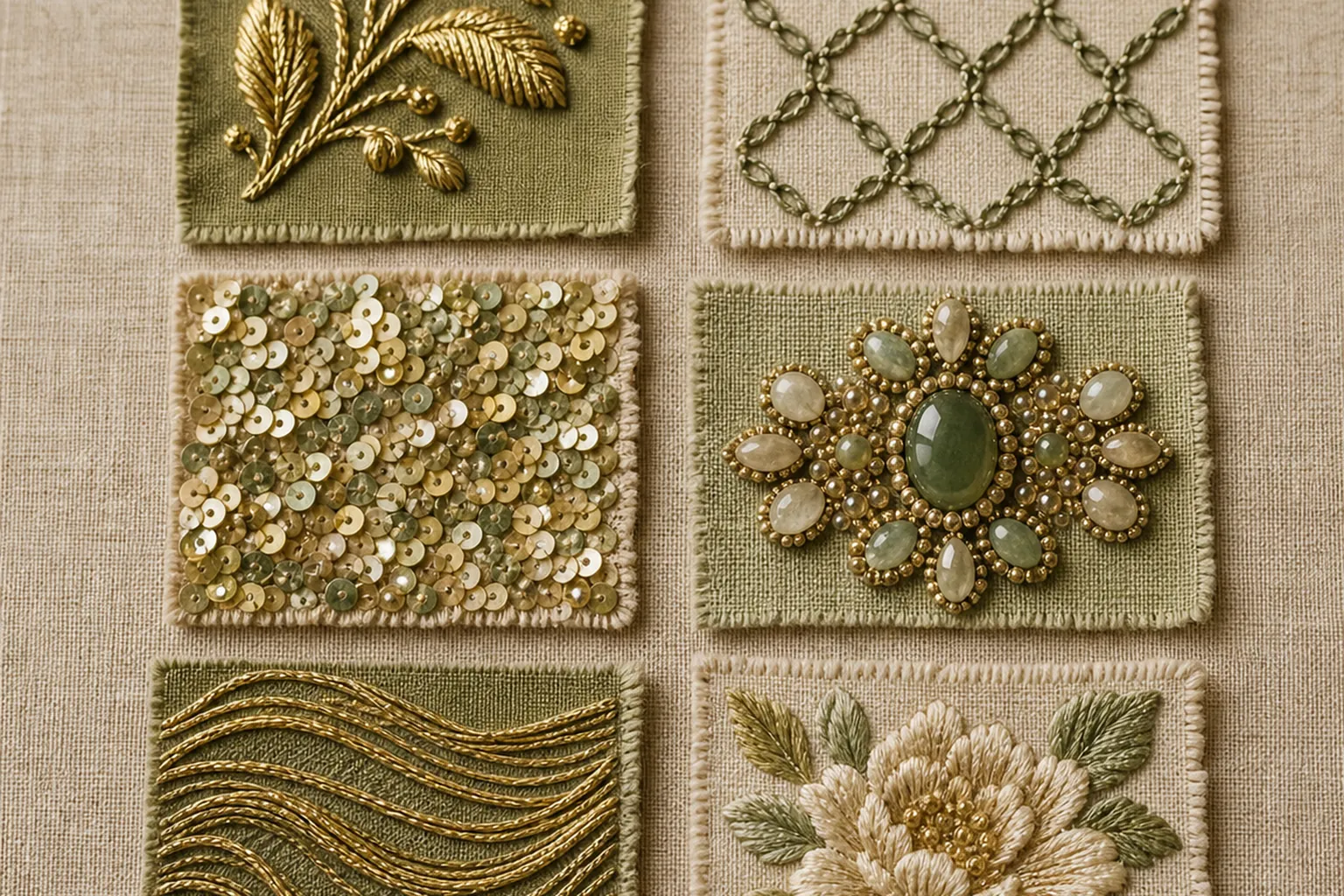
- Aari (tambour) hook work — fine continuous chain stitch. Fast, detailed, and the best value for a filled design. Our default recommendation for most kurti work.
- Thread and silk shading — satin and long-and-short stitch for florals with real depth. Slower, and worth it on a statement piece.
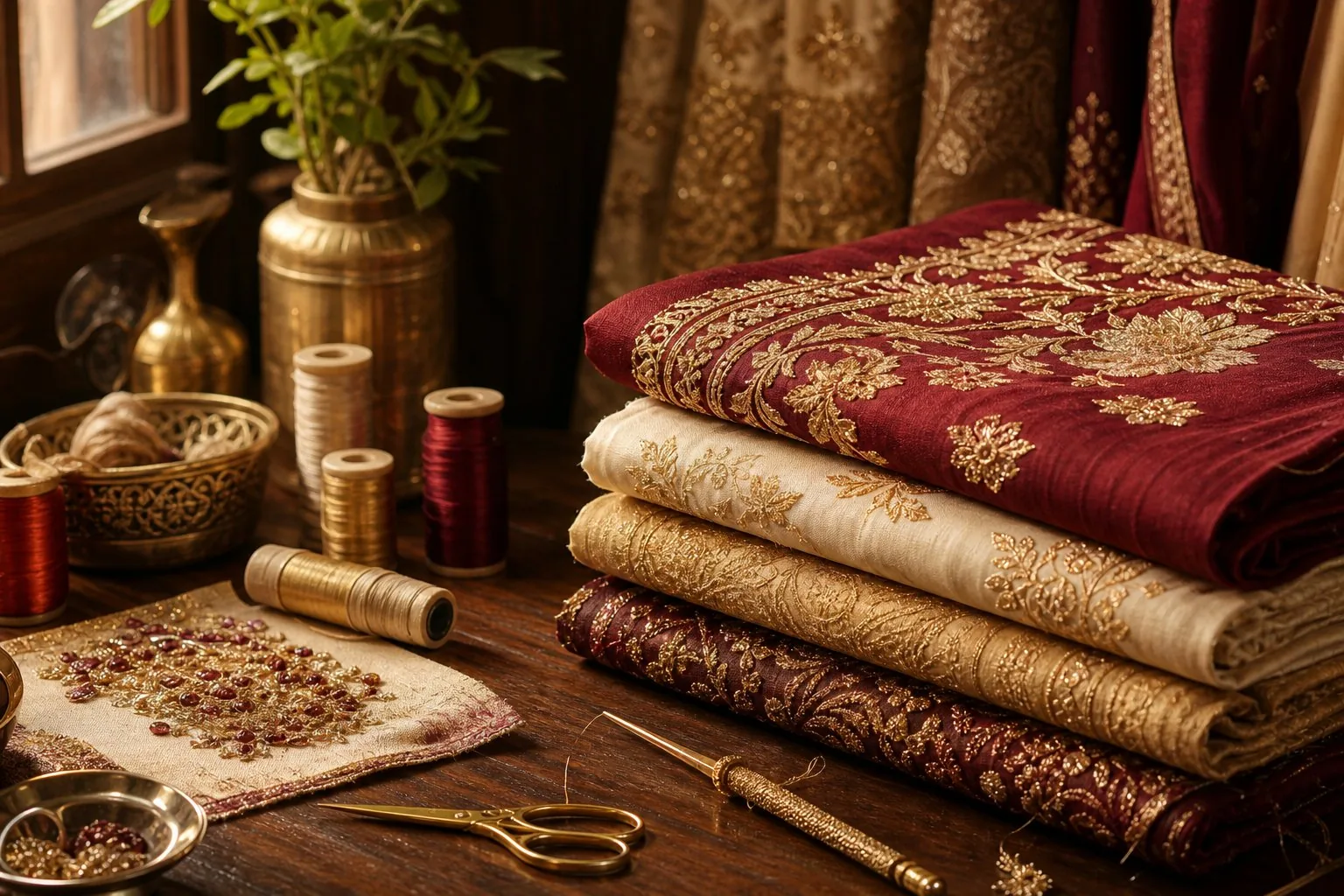
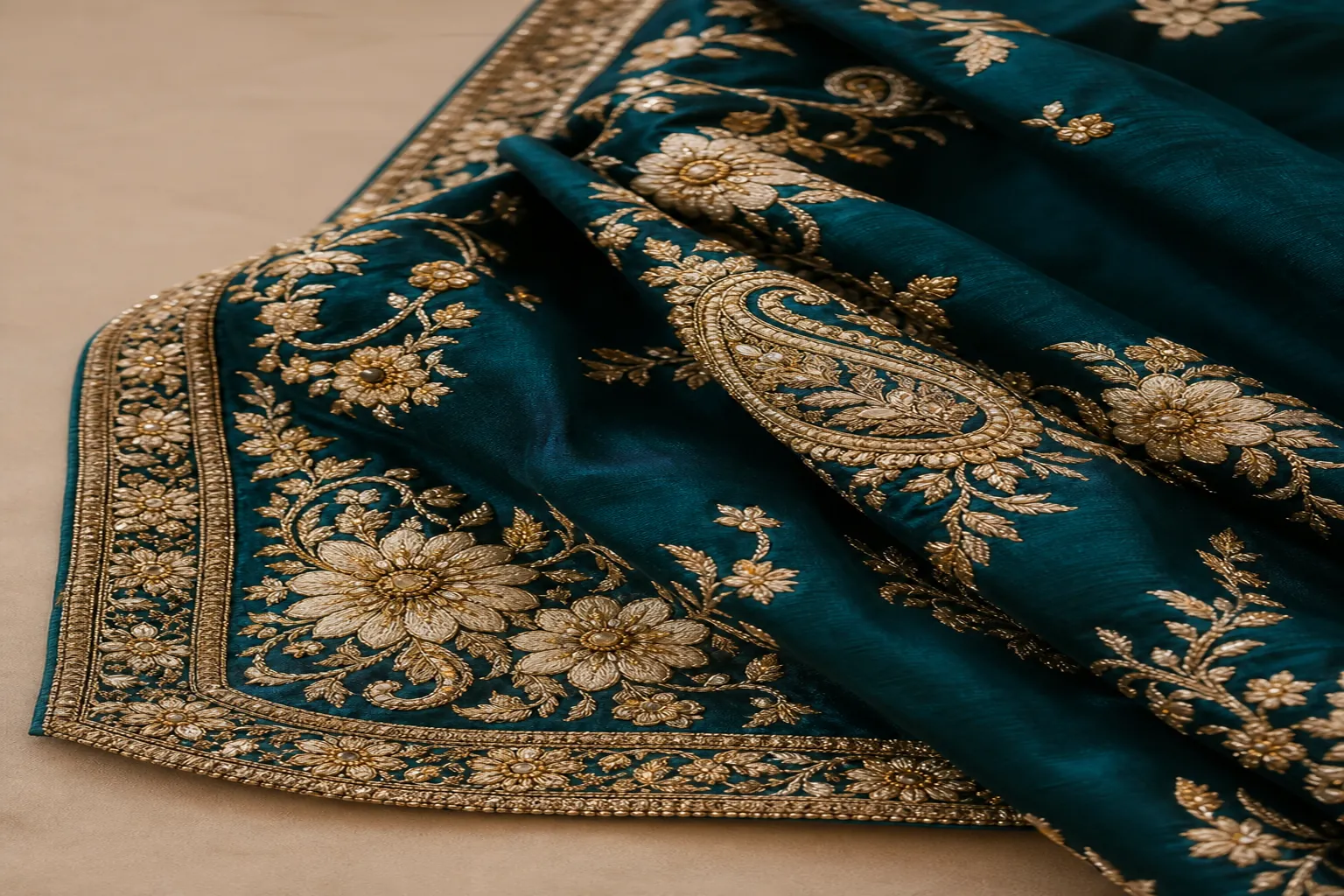
- Zari and zardozi — gold metal thread, flat or raised. Formal, festive, heavier. Best on a yoke or daaman rather than all over a daily kurti.
- Sequin, bead and cutdana — light-catching. Excellent for evening, less practical for a garment that will be washed often.
- Mirror and stone — bold and regional in character. Strong on cotton and on straight silhouettes.
- Hand-guided machine work — for repeat designs and bulk runs. Far cheaper per piece, and genuinely the right answer for a production order.
What your fabric will actually take
This is the part that gets skipped, and it is the part that ruins garments. The ground fabric decides what is possible before the design does.
- Cotton and cotton blends — forgiving, take almost anything. Ideal for mirror, thread and aari work.
- Rayon and muslin — soft and fluid. Keep the work light or back the fabric, or it will drag.
- Georgette and chiffon — beautiful and unforgiving. Heavy work puckers them. Needs backing and a lighter hand.
- Silk and raw silk — the best base for zardozi and heavy zari. Carries weight without distorting.
- Organza and net — sheer, so the reverse of the work shows. Only certain techniques finish cleanly here.
- Velvet — gorgeous with goldwork, but the pile crushes under a frame and needs careful handling.
Send us a photo of the fabric before you settle on a design. It takes a minute and it is the single most useful thing you can do.
What drives the price
Embroidery is priced in labour hours, so cost follows coverage and technique rather than the garment itself.
- Coverage — an outlined motif may take hours; the same motif filled solid can take days.
- Technique — aari covers ground faster than fine needle shading. Zardozi is slowest because each element is placed individually.
- Materials — real zari, stones and crystals add material cost on top of labour.
- Fabric — delicate grounds need backing and slower work, so the same design costs more on georgette than on silk.
- Quantity — per-piece cost falls sharply on a run, because the design is set up once.
We publish no rate card, because a rate card is how customers end up with surprise revisions. Send a photo and you will have a real figure the same working day.
Four mistakes we see weekly
- Choosing the design before the fabric. Half of all redesign requests start here.
- Spreading a small budget thinly. Light work everywhere looks cheaper than concentrated work in one place.
- Matching thread to a screen. Colour on a phone is not colour on silk. Ask for a physical swatch.
- Forgetting the garment gets worn. Heavy beading on a daily kurti will not survive the washing it needs.
Ordering one, or forty
A single kurti is normal work here and is not treated as a small job. For boutiques and labels ordering a run, we stitch an approved master sample first and keep it physically on the table for the whole production, so piece forty matches piece one.
Send a photo of the garment or fabric, a reference for the design, the quantity and your deadline. You will get a real quotation the same working day.
Tell us what you want made.
Send a reference photo, your fabric and your deadline. We reply with honest advice and a clear quotation.
Frequently asked questions
Where should embroidery go on a kurti?
The yoke is the most flattering and most requested, followed by the neckline and placket. Yoke plus daaman is a complete design — adding sleeves and side panels on top usually makes the garment look busy.
Which embroidery is cheapest for a kurti?
Aari or tambour hook work in thread, kept to an outlined or lightly filled design on a neckline or yoke. It gives the most visible effect for the fewest labour hours.
Can you embroider a kurti I already own?
Yes, and it is very common. Bring it to the Dahisar East studio or courier it. We check whether the fabric will carry the design before starting.
Will embroidery survive washing?
Thread and aari work on cotton handles gentle washing well. Sequin, bead, stone and zari work should be dry-cleaned. We tell you the care requirement before you commit to a technique.
How long does a kurti take?
Usually one to three weeks of working time for a yoke or daaman, depending on coverage, plus a few days at the front to agree the design and quote.
Do you do bulk kurti runs for boutiques?
Yes. We stitch an approved master sample first and hold the entire run against it, with size-graded placement so the motif sits correctly on every size.
Still have a question? Message us on WhatsApp or send an enquiry.