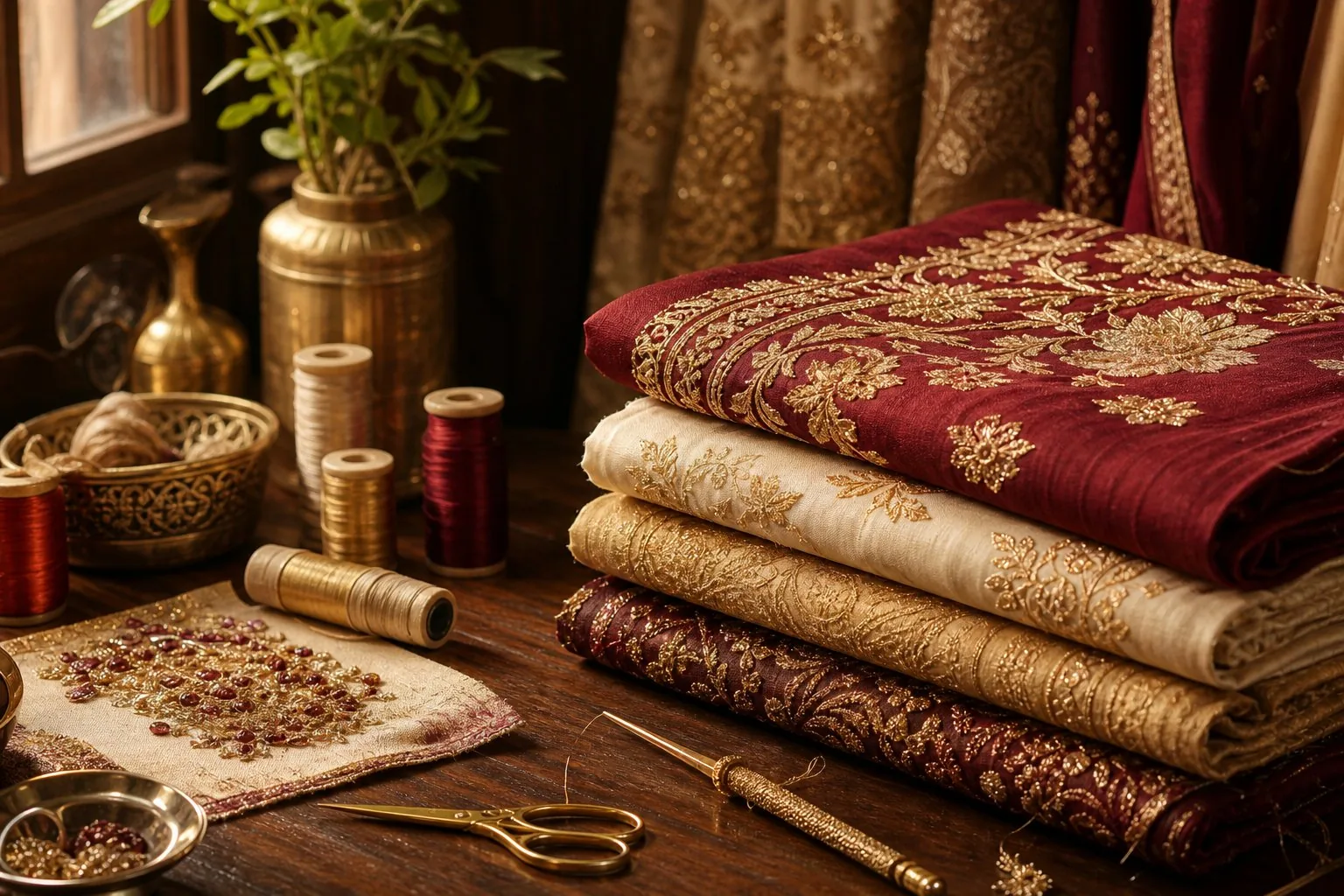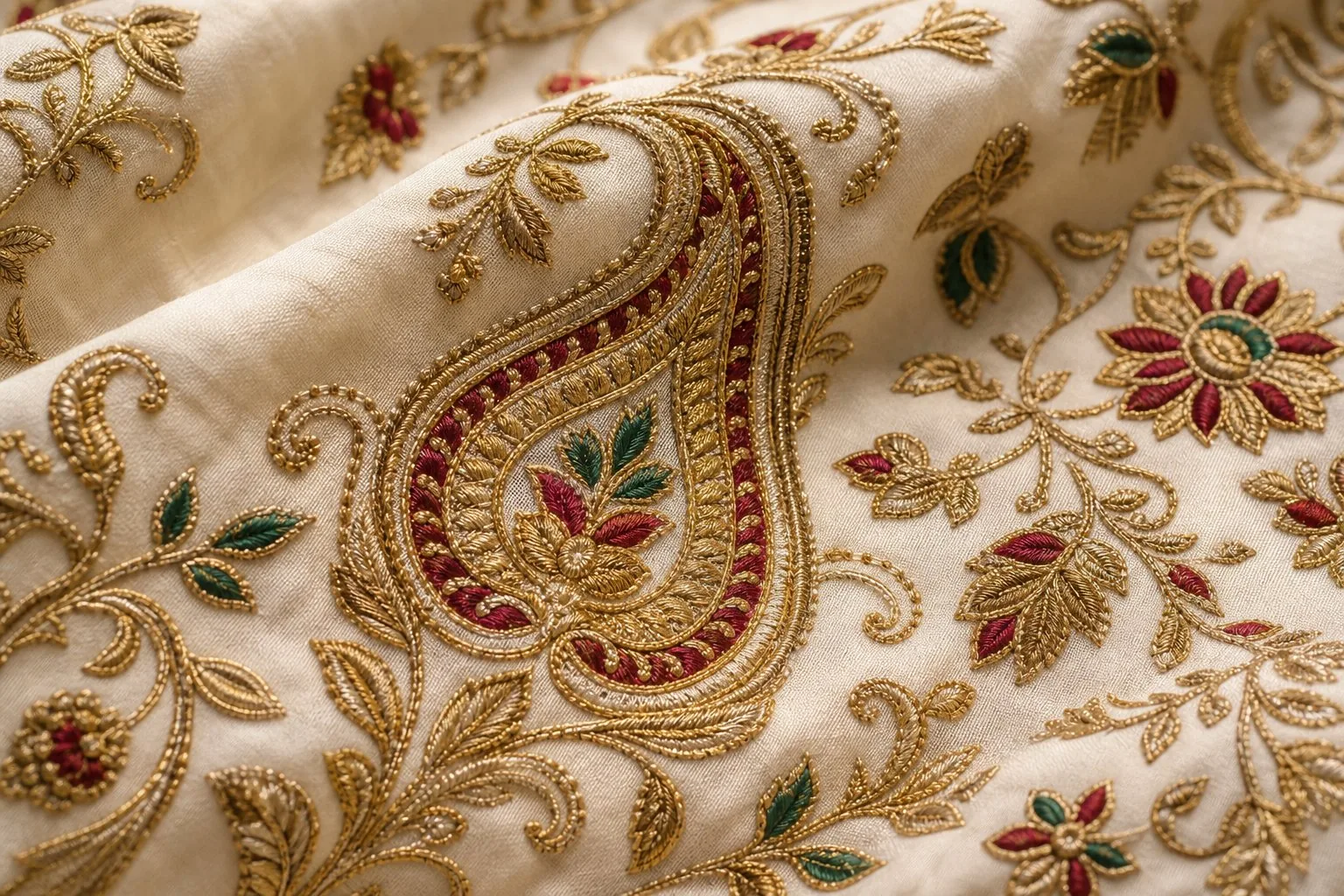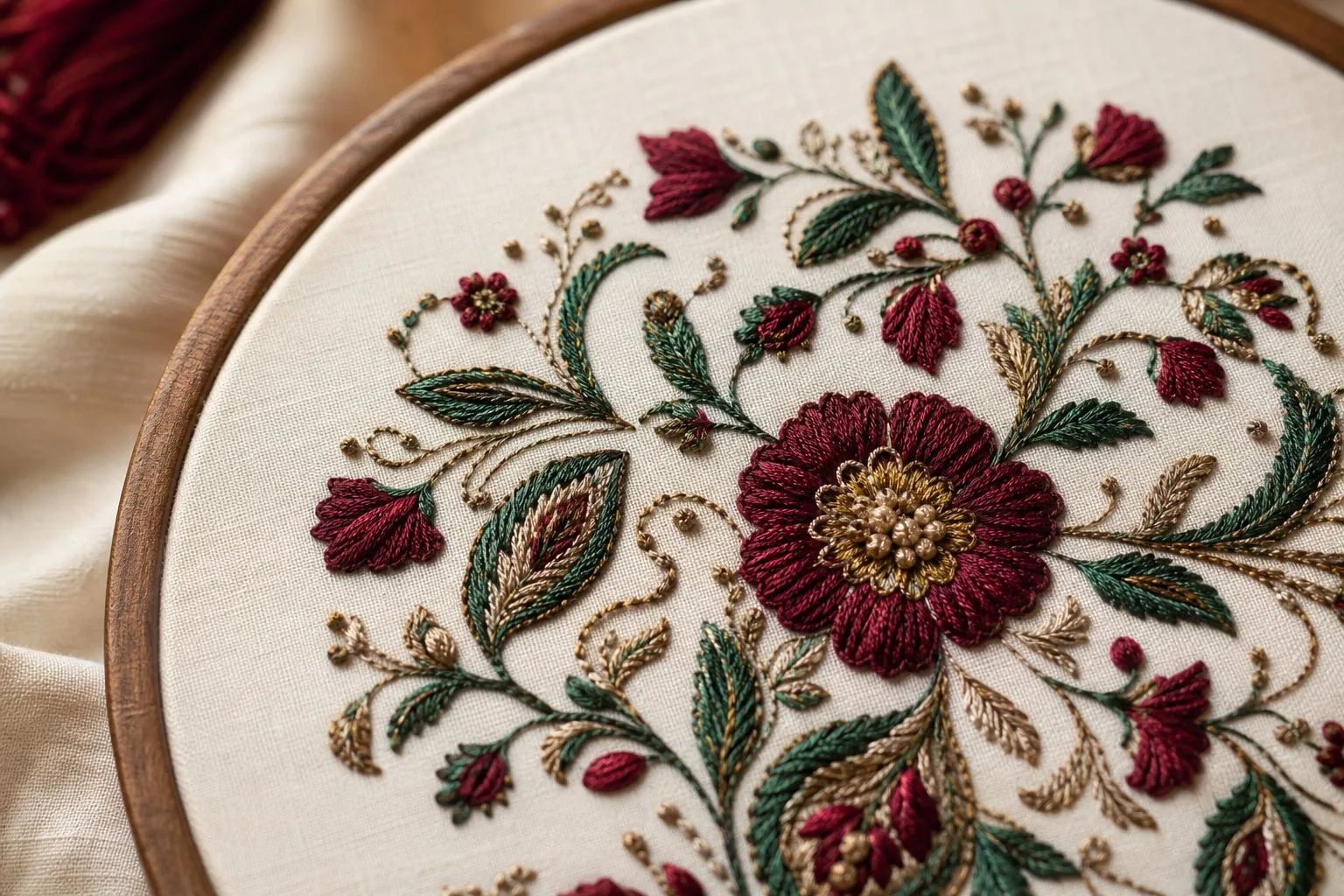
Hand embroidery in Malabar Hill and South Mumbai
South Mumbai asks for different work than the suburbs do — more restoration, more discretion, and almost never a walk-in. Here is how we handle embroidery for Malabar Hill, Walkeshwar, Napean Sea Road and Breach Candy without you crossing the city.
What South Mumbai asks for
We work from Dahisar East, about 35 km north of Malabar Hill. That distance shapes everything about how we serve South Mumbai — and, over the years, it has also shaped what South Mumbai sends us.
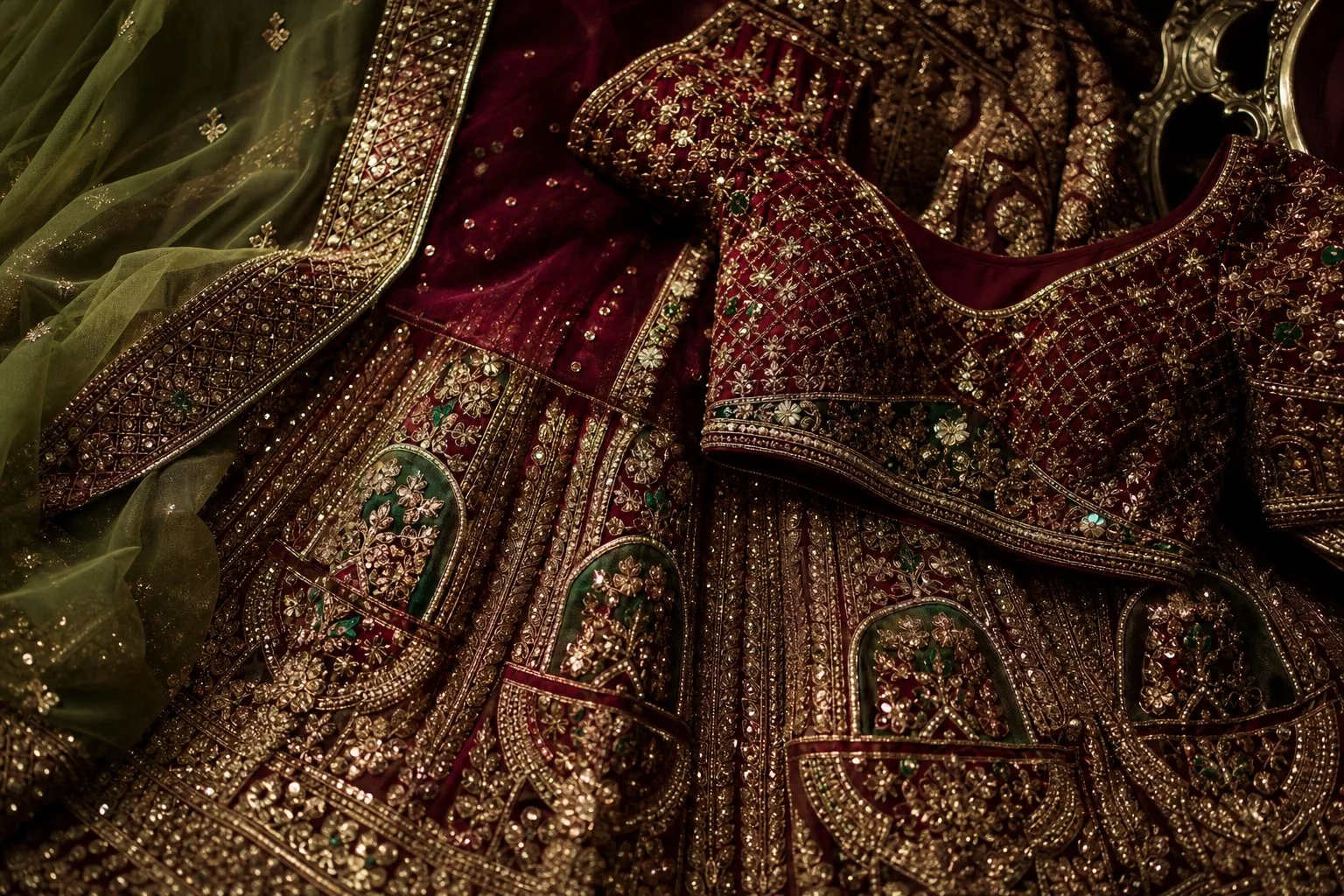
The enquiries that come from Malabar Hill, Walkeshwar, Teen Batti, Napean Sea Road, Kemps Corner, Breach Candy, Cumballa Hill and Peddar Road look consistently different from the ones we get in the western suburbs. Fewer new garments. Far more restoration. Longer lead times and more patience. A stronger preference for tonal, restrained work over heavy surface coverage. And a near-universal expectation that nothing about the piece ends up on anyone’s Instagram.
If you are comparing options, the honest framing is this: a karigar three streets away is more convenient for a quick alteration. For work that takes weeks — heirloom repair, a trousseau, a piece you cannot replace — the deciding factor is who can actually execute it, not who is nearest. That is the work we ask to be judged on.
Heirloom restoration: the most common request
More than half of what reaches us from South Mumbai is not new embroidery at all. It is a piece that already exists and matters.
Typically it is a Paithani, Banarasi or Kanjeevaram saree from a mother or grandmother. The weave is sound, but the zari has oxidised and gone dark, the pallu has pulled at the fold lines, or a section of the border has lifted away from the ground fabric. Sometimes the request is a conversion — turning a saree that will never be draped again into a lehenga, a jacket or a set of blouses, while keeping the original border intact and visible.
This work is slower and more demanding than new embroidery, because the constraint is the existing piece. A few things we will tell you honestly at the start:
- Matching aged zari is a judgement call, not a purchase. New zari next to forty-year-old zari reads as a patch. We colour-match to the aged tone, not to the original.
- Partial repair usually beats full rework. If seventy per cent of a border is sound, re-embroidering all of it costs more and destroys more history than repairing the damaged thirty.
- Old silk has a limit. Where the ground fabric has become brittle at the folds, heavy new work will simply tear it. In those cases we advise backing and stabilising first — or, occasionally, that the piece should be framed rather than worn.
- Conversion is a one-way decision. Once a saree is cut for a lehenga, it is not a saree again. We will always ask you to confirm twice.
We photograph the piece on arrival, before anything is touched, and share the assessment before starting. If we think the honest answer is “leave it alone”, we say so.
Discretion is part of the work
A meaningful share of our South Mumbai clients are people whose wardrobes are, in one way or another, public. Business families, people in public life, and their households.
Our position on this has not changed in three decades and applies to every client regardless of profile: we do not publish client work. This is the reason our gallery shows technique, materials and process rather than finished commissions. It is not an aesthetic choice. It is the only way to run a studio that designers and private clients can both trust.
In practice that means no photographs of your piece on social media, no use in any portfolio, no forwarding of your reference images, and no discussion of your order with anyone else. If your household or your designer requires a signed non-disclosure agreement before work begins, send it across — we sign them routinely and without negotiation.
Malabar Hill to Dahisar, without the trip
Nobody should drive 35 km to hand over a blouse. The Coastal Road and the Sea Link have made the run north considerably faster than it once was, but it is still an afternoon. Almost every South Mumbai order we take is handled without the client visiting at all.
- Send photographs first. WhatsApp us the garment or fabric in daylight, a close-up of any damage, and a reference image if you have a design in mind. Add the deadline. Most questions are settled in this one message.
- We quote before collection. You get a written estimate, a technique recommendation and a realistic timeline before anything is moved. If the piece needs to be seen in person to be quoted accurately, we say that rather than guessing.
- Scheduled pickup or insured courier. For heirloom and high-value pieces we arrange a collection at a time you choose. For everything else, a tracked, insured courier is faster and equally safe. Either way the piece is photographed at handover and on arrival.
- Approvals by photograph and video. You see the thread and material selection before work starts, progress images at the midpoint, and detailed images of the finished piece before it is packed.
- Return the same way. Packed to protect raised work — zardozi and stone work are never folded through the motif — and delivered back to your address.
You are welcome at the studio if you would rather see the work in person. Most people, understandably, do not make the journey twice.
You already live next to the best fabric in the city
One genuine advantage of ordering from South Mumbai: some of Mumbai’s best fabric is a short drive from your door. Milan Signature Fabrics is in Malabar Hill itself, with a second store in Khar West, and is worth the visit for silk jacquards, cotton satin and brasso organza. Vandana Fabrics has been on Napean Sea Road since the early 1980s and is a standing recommendation for Banarasi, chanderi and pure silks. Both are minutes away, and both stock material that takes hand embroidery beautifully.
If you are planning to buy fabric and have it embroidered, please read our guide to embroidery on your own fabric before you buy. The single most expensive mistake we see is buying the exact cut length, leaving no margin for the embroidery frame — and the second is sending fabric to the tailor before sending it to us.
We have no commercial relationship with any fabric store. We mention them because that is where our South Mumbai clients shop.
What it costs, and what moves the price
We quote per piece, not per hour, and we quote after seeing photographs. Anyone who gives you a firm number before seeing the work is guessing. What actually drives the figure:
- Coverage area — a border and a few buttas is a different order of work from a fully covered yoke.
- Technique — zardozi with dabka, nakshi and kora is slower and costlier than flat thread work. Aari covers ground faster.
- Materials — real zari, semi-precious stones and quality crystals are a material cost, not a labour cost, and we itemise them separately.
- Base fabric — georgette, chiffon and old silk need backing and slower handling. Velvet crushes in the frame and needs an experienced hand.
- Restoration complexity — matching aged zari and stabilising fragile ground fabric takes longer than new work on new cloth.
- Deadline — a normal timeline costs less than a compressed one. We would rather quote honestly than promise a date we will miss.
Restoration in particular is quoted in stages: assessment first, then the repair itself, so you are never committed to a figure before you know what the piece actually needs.
For more on techniques and what suits which garment, see our services, bridal embroidery in Mumbai, or the wider suburb-by-suburb guide.
Tell us what you want made.
Send a reference photo, your fabric and your deadline. We reply with honest advice and a clear quotation.
Frequently asked questions
Do you have an embroidery shop in Malabar Hill or South Mumbai?
No. Our studio is in Dahisar East and we serve Malabar Hill, Walkeshwar, Napean Sea Road, Teen Batti, Kemps Corner, Breach Candy, Cumballa Hill, Peddar Road and Gamdevi by scheduled pickup and insured courier. Approvals are handled by photograph and video, so most clients never need to travel.
Can you collect a saree or garment from my home in Malabar Hill?
Yes. For heirloom and high-value pieces we arrange a collection at a time you choose. The piece is photographed at handover and again on arrival at the studio, and returned the same way once finished.
Can you restore the zari on an old Paithani or Banarasi saree?
Yes, this is one of our most frequent South Mumbai requests. We colour-match to the aged tone of the existing zari rather than to new zari, and we usually recommend repairing only the damaged sections rather than reworking the whole border, which costs more and removes more of the original.
Can an old saree be converted into a lehenga or jacket?
Often yes, provided the ground fabric is still sound. We assess the piece first and tell you honestly if the silk has become too brittle at the fold lines. Conversion is permanent, so we always ask you to confirm before cutting.
Will my piece appear on your website or social media?
No. We do not publish client work, which is why our gallery shows technique and materials rather than finished commissions. If you or your designer need a signed non-disclosure agreement, send it and we will sign it.
How long does South Mumbai delivery take?
Collection and return usually add two to four days in total either side of the work itself. The embroidery timeline depends on the piece — we give you a realistic date in the written quotation, before anything is collected.
Still have a question? Message us on WhatsApp or send an enquiry.