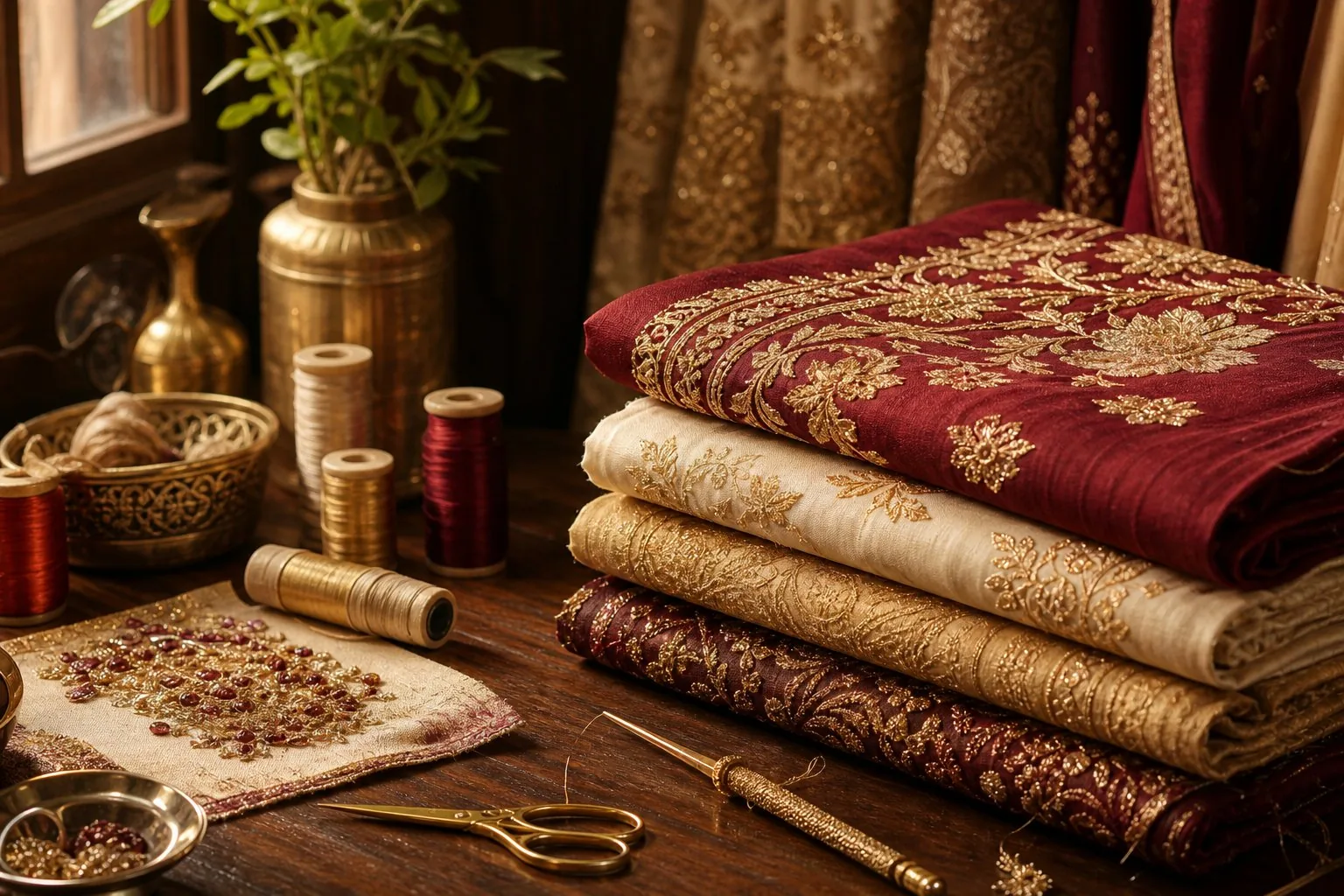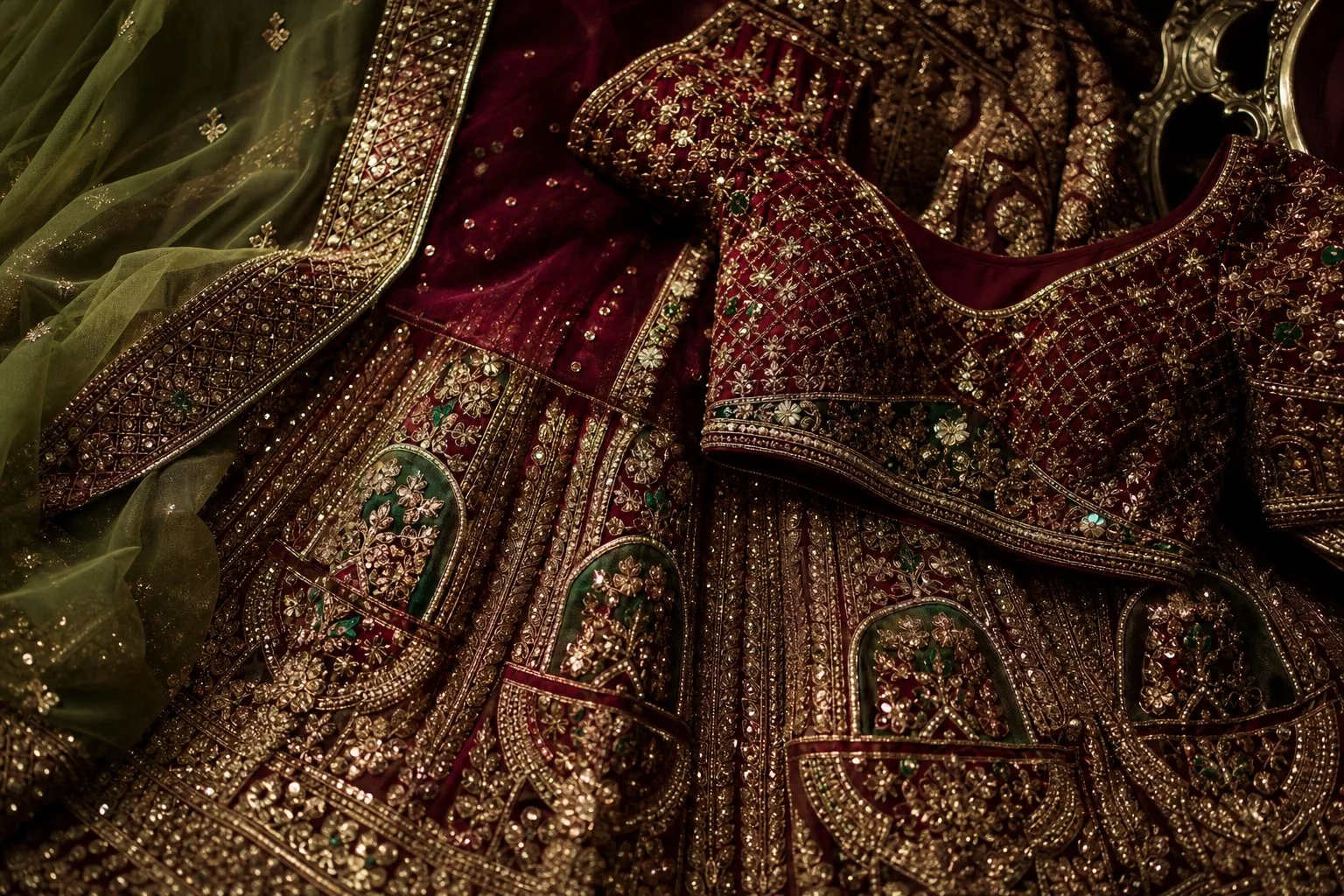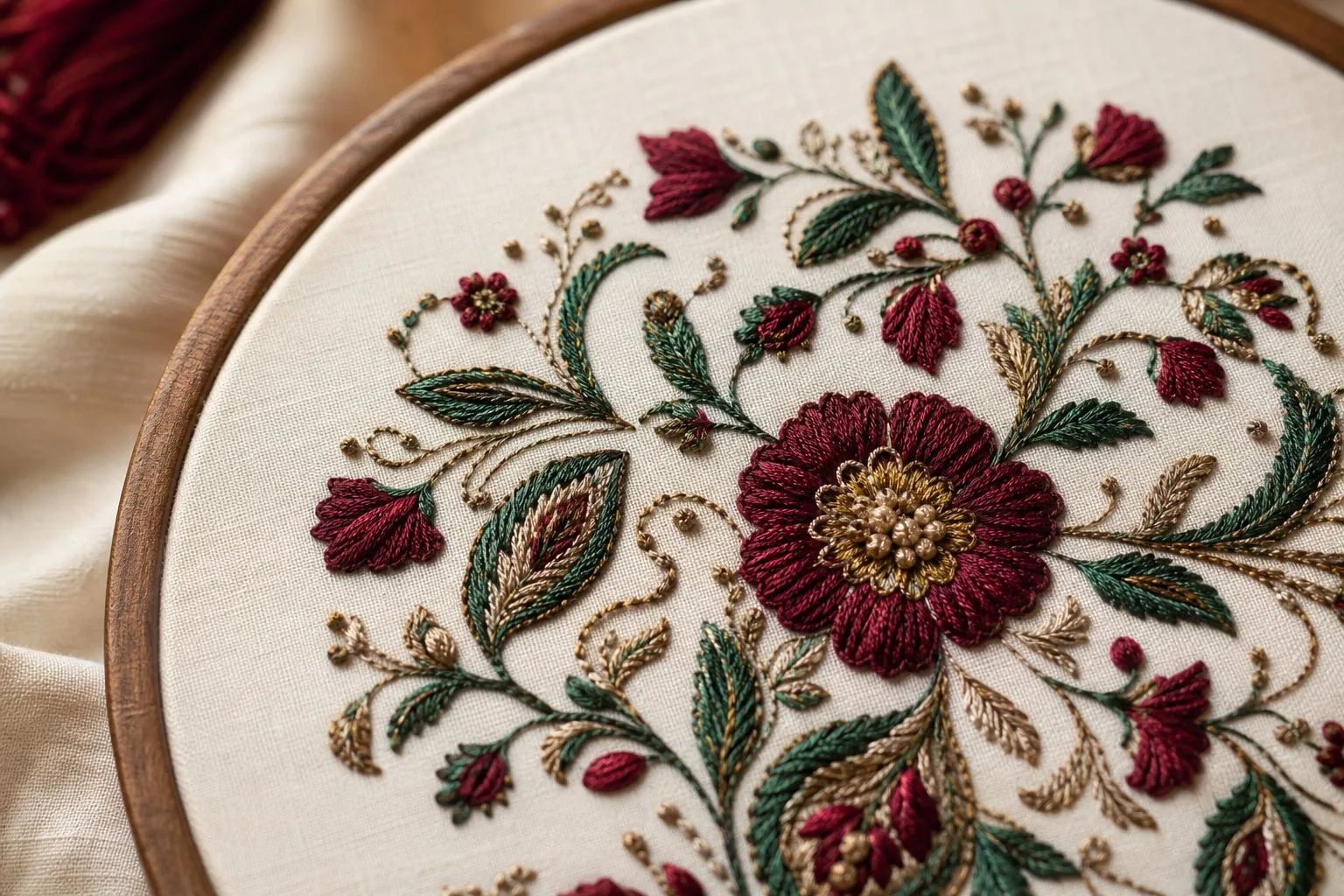
Bought your fabric in Mumbai? Read this before you stitch it
Every week someone brings us beautiful fabric from Khar or Napean Sea Road that has already been cut and stitched — which quietly rules out half of what could have been done with it. Here is the right order to do things in.
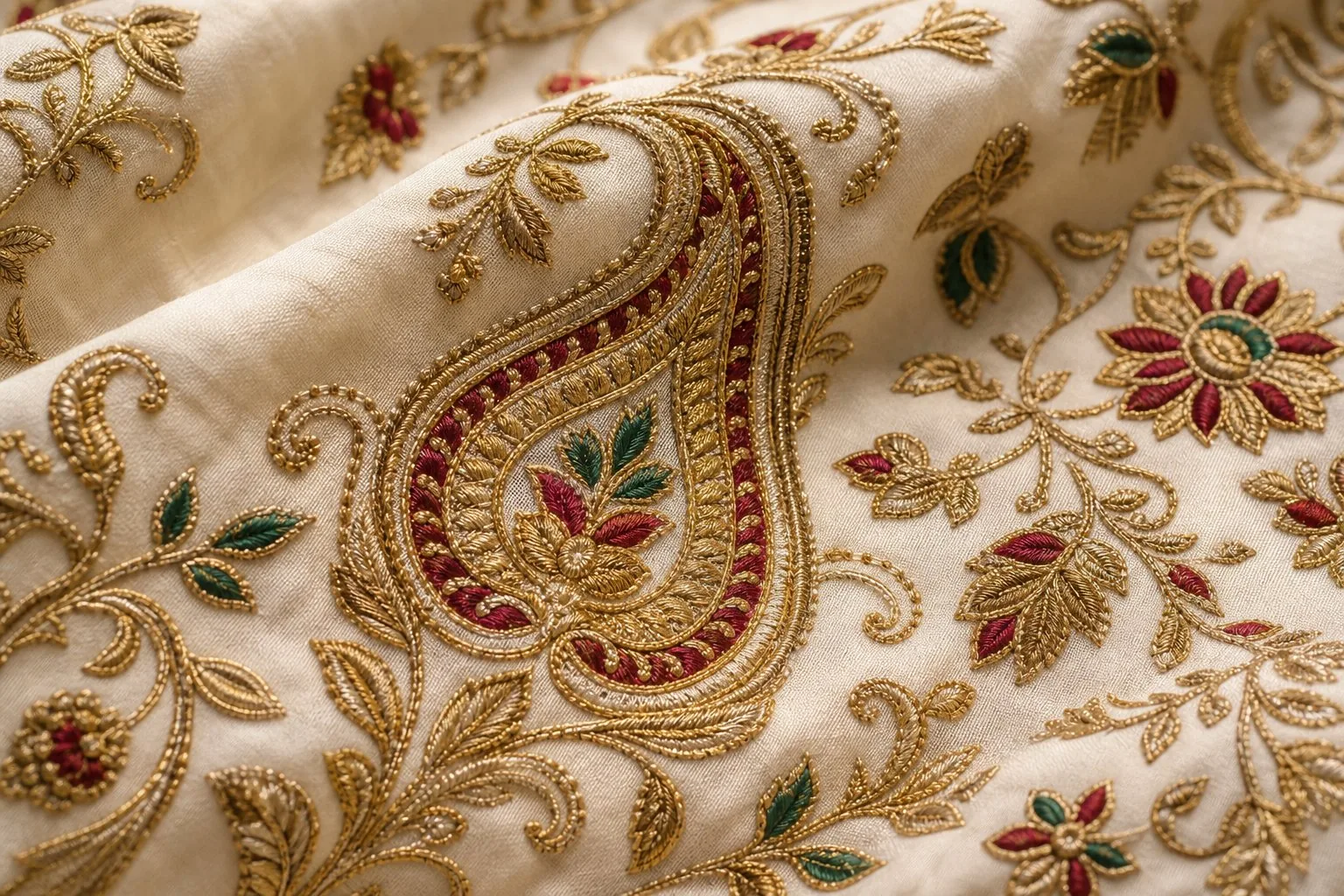
Where Mumbai actually buys fabric
Mumbai has a handful of fabric destinations that people travel across the city for, and a customer arriving at our studio with a bag from one of them is a weekly occurrence.
- Vandana Fabrics — Napean Sea Road, trading since the early 1980s, with stores also on Linking Road in Khar West and in Ghatkopar East. Strong on Banarasi, bandhani, chanderi and pure silks.
- Saroj Fabrics — Jain Arcade, off Linking Road in Khar West, in business since 1976, with branches in Andheri West and Borivali West. A standing favourite for designer fabrics and blouse pieces.
- Milan Signature Fabrics — Malabar Hill and Khar West. Luxury end: silk jacquards, cotton satin, brasso organza, imported silks.
- Glanz Fabrics and The Fabric Studio — also Khar West, within walking distance of the above.
- Mangaldas Market (Crawford Market) and House of Fabrics (Bhuleshwar) — the wholesale end, best prices, most work to navigate.
- Hindmata and Thakur Cut Pieces, Dadar — excellent for cut pieces and blouse lengths.
- Samrat, Santacruz West and Anwarallys, Elco Market, Bandra.
We have no commercial relationship with any of these shops and earn nothing from mentioning them. They are simply where our customers buy. If you are coming from the northern suburbs, the Saroj branch in Borivali West on Shimpoli Road is about fifteen minutes from our Dahisar studio, which makes a single trip realistic.
The one mistake: stitching before embroidering
If you remember nothing else from this page, remember the sequence:
- Buy the fabric.
- Get it embroidered, flat and uncut.
- Then send it to the tailor.
Most people do it the other way round, and it is completely understandable — the tailor is the person you think of first. But hand embroidery is worked on fabric stretched tight in a frame. That requires a flat, uncut, unstitched piece of cloth.
Once a blouse or kurta has been stitched, several things change at once. The karigar can no longer frame the panel properly, so tension is compromised and the stitch quality drops. Seams, darts and linings block the needle from the reverse, which rules out aari work almost entirely. Designs cannot run across a seam without a visible break. And the work takes longer and costs more for a worse result.
There is a professional middle path, and it is the one designers use: ask your tailor to cut and mark the panels but not stitch them, then send us the cut pieces. You get embroidery placed exactly to your measurements, worked flat, and the tailor assembles afterwards. If your tailor has already made a paper pattern or a fitted trial blouse, send that along too.
How much extra fabric to buy
This is the part people find out too late, standing in the shop with exactly the length the tailor asked for.
Fabric held in the embroidery frame gets tensioned and marked, and that margin cannot form part of the finished garment. As a working rule:
- Add 20–30 cm beyond the tailor’s requirement for any panel that will be embroidered.
- Blouse pieces — buy the full metre rather than the exact cut piece. The difference in cost is small; the difference in what we can do is not.
- Sheer fabrics — organza, net, chiffon — need a little more again, because they are backed during work.
- Buy a spare 30 cm of the same fabric from the same roll if you can. This is the single best insurance you can buy: it lets us test thread, stone and stitch on your actual fabric before touching the garment panel, and it covers you if a piece is damaged later. Dye lots vary between rolls, so buying it six months later is rarely a match.
- Pre-shrink anything washable before embroidery. Cotton, chanderi and muslin can move. Embroidery does not shrink with the fabric, and puckering afterwards cannot be undone.
Which fabrics take which technique
Fabric decides technique far more than preference does. What you can realistically ask for:
- Raw silk, silk jacquard, dupion, cotton satin — the best all-round bases. Hold weight well, take zardozi, stone and heavy thread work without distortion. Most of what Milan Signature and Vandana stock at the top end falls here.
- Georgette and chiffon — beautiful, but they drape rather than support. Heavy zardozi drags and puckers. Backing is essential, and lighter aari, sequin and bead work suits them far better.
- Organza and brasso organza — sheer, so the reverse of the work shows. Every thread carry has to be managed. Gorgeous for delicate motifs and borders, unsuitable for dense coverage.
- Velvet — outstanding with zardozi, and the classic base for bridal. The pile crushes under the frame and needs an experienced hand. Worth it, but not a beginner’s fabric.
- Net — sequin, bead and stone work only, over a stabiliser. Thread-heavy designs will not hold.
- Cotton, chanderi, muslin, linen — thread work, chikan-style, light aari. Restrained and very wearable. Avoid heavy metal work, which the fabric cannot carry.
- Banarasi and pre-woven zari fabric — resist the urge to add much. These are already busy. A border accent or a few buttas in a matched tone reads far better than a second layer of ornamentation competing with the weave.
- Pre-embroidered fabric bought by the metre — common in Khar. Perfectly workable, but tell us before you buy if you want to add to it, because matching an existing machine-made motif by hand is a specific skill and not always advisable.
One practical warning: test for colour bleed. Some deeply dyed silks and georgettes run when damp. If that dye reaches white pearls, crystals or light zari, the piece is finished. We test the swatch first — which is the other reason to buy that spare 30 cm.
Planning placement before anything is cut
Embroidery is placed on a body, not on a rectangle of cloth. A motif that looks perfectly balanced on a flat panel can land badly once the garment is made up.
So before we begin, we need to know the garment, not just the fabric: what is being made, the final measurements, where the seams and darts will fall, whether it is lined, and how it will be worn. A yoke design for a size 36 blouse is not the same design scaled for a size 44 — placed naively, motifs end up distorted across the bust or cut in half at a princess seam.
This is also where the sequence pays off again. With uncut fabric and your measurements in hand, we can place the design so that the strongest motif sits where it should, borders meet cleanly at the seams, and nothing important is lost to a dart.
What to send us with your fabric
- The fabric, uncut if possible, plus the spare swatch.
- The lining, if you have bought it.
- A reference image of the design you have in mind — a screenshot is fine.
- The garment and final measurements, or the tailor’s paper pattern.
- Your deadline, including the date the tailor needs it back, not the date you need to wear it.
- Any constraint that matters — a budget ceiling, a colour that must match existing jewellery, a preference for no stones.
Send those six things on WhatsApp and you will usually get an accurate quotation on the first reply, without a trip.
Cost, timelines and the tailor handover
We quote per piece after seeing photographs of the fabric and the reference. Material costs — real zari, stones, crystals, quality sequins — are itemised separately from labour, so you can see what you are paying for and adjust.
On timing, build the chain backwards from the event. Embroidery on a blouse or yoke typically needs one to three weeks depending on coverage and technique; heavier bridal work needs considerably longer. Then add the tailor’s stitching time after that. Wedding season compresses everyone’s calendar, so if the date is fixed, start early. We will always tell you if a deadline is not realistic rather than accept it and disappoint you.
We return embroidered panels flat and protected, never folded through raised work, ready for your tailor. If you would prefer the whole thing handled end to end, we do that too — see our services or the studio process.
Working with a shop or label rather than for yourself? Our boutique and fashion designer pages cover sampling, repeat runs and confidentiality. If you are in the Khar or Bandra area, this page explains how collection and delivery work from there.
Tell us what you want made.
Send a reference photo, your fabric and your deadline. We reply with honest advice and a clear quotation.
Frequently asked questions
Can I bring my own fabric for embroidery?
Yes, most of our customers do. Bring or courier the fabric uncut if possible, with 20 to 30 cm extra beyond your tailor's requirement to allow for the embroidery frame, plus a spare swatch from the same roll so we can test thread and stones before touching the garment panel.
Should I get the garment stitched before or after embroidery?
Almost always before stitching. Hand embroidery is worked on flat fabric stretched in a frame, so a cut and stitched garment limits stitch quality, rules out most aari work and costs more. The professional method is to have the tailor cut and mark the panels but not stitch them, then send the cut pieces to us.
How much extra fabric should I buy for embroidery?
Add 20 to 30 cm beyond what your tailor asks for, per embroidered panel. For a blouse, buy the full metre rather than an exact cut piece. Sheer fabrics such as organza, net and chiffon need slightly more because they are backed during the work.
Do you work on fabric bought from Vandana, Saroj or Milan Signature Fabrics?
Yes. We regularly embroider fabric bought from Khar, Napean Sea Road, Dadar and Mangaldas Market. We have no affiliation with any fabric store. Send us a photograph of what you have bought and we will confirm which techniques suit it.
Which fabrics are best for heavy zardozi work?
Raw silk, dupion, silk jacquard, cotton satin and velvet carry weight well. Georgette, chiffon, organza and net will pucker or drag under heavy metal work and are better suited to lighter aari, sequin and bead embroidery, usually over a backing.
Can you embroider a garment that is already stitched?
Sometimes, depending on the garment and the design. Access from the reverse is limited and the design cannot cross seams cleanly, so the range of techniques narrows and the cost rises. Send photographs and we will tell you honestly what is achievable.
How long does embroidery on my own fabric take?
A blouse or yoke typically takes one to three weeks depending on coverage and technique, with heavier bridal work needing longer. Remember to add your tailor's stitching time after that, and start early during wedding season.
Still have a question? Message us on WhatsApp or send an enquiry.